Tesamorelin
$52.99 – $89.99Price range: $52.99 through $89.99
Discount per Quantity
| Quantity | Discount | Price |
|---|---|---|
| 5 – 10 | 5% | $85.49 |
| 11 – 20 | 10% | $80.99 |
| 21+ | 15% | $76.49 |
Guaranteed
Ordering
Tested
Tracking
Commitment
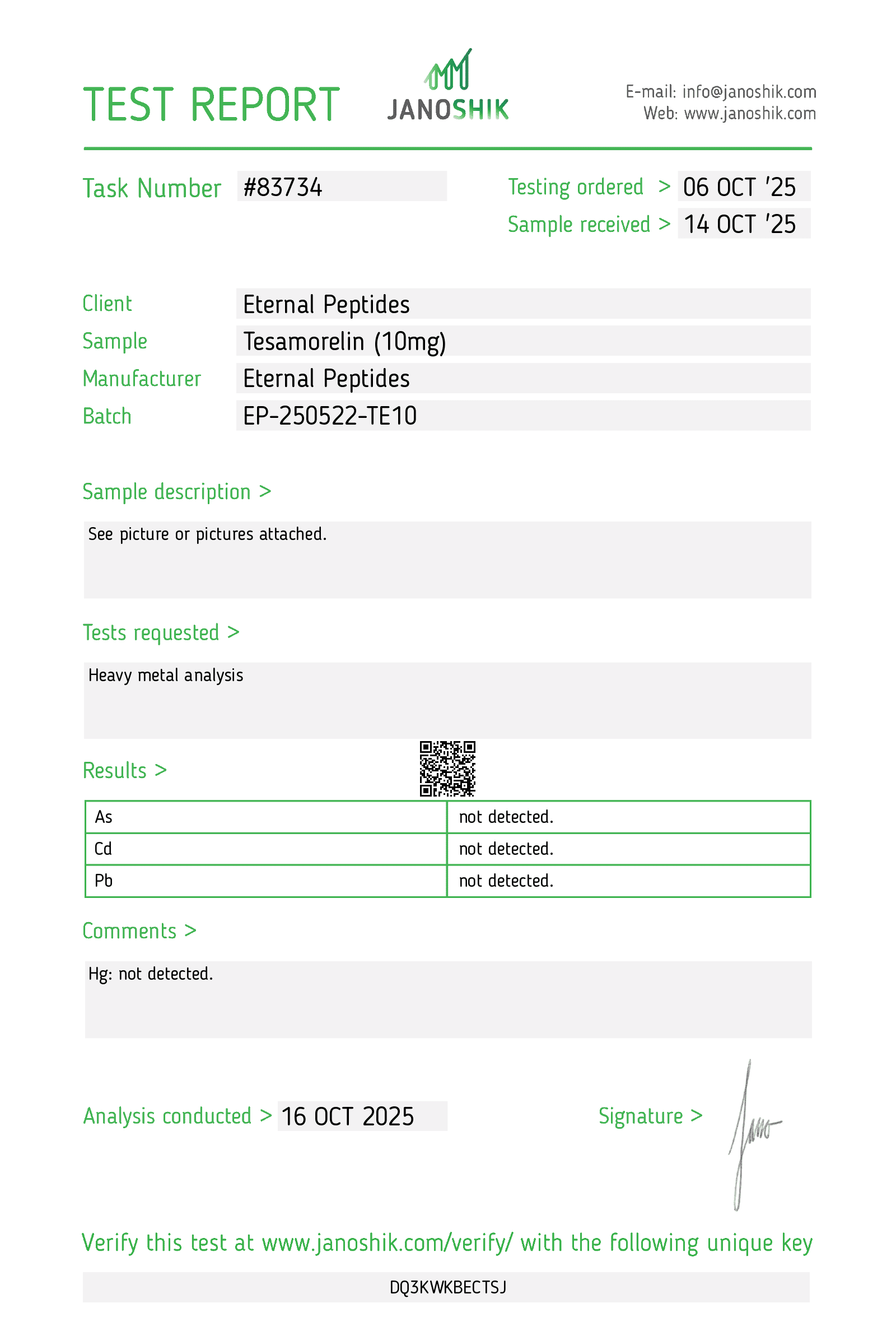
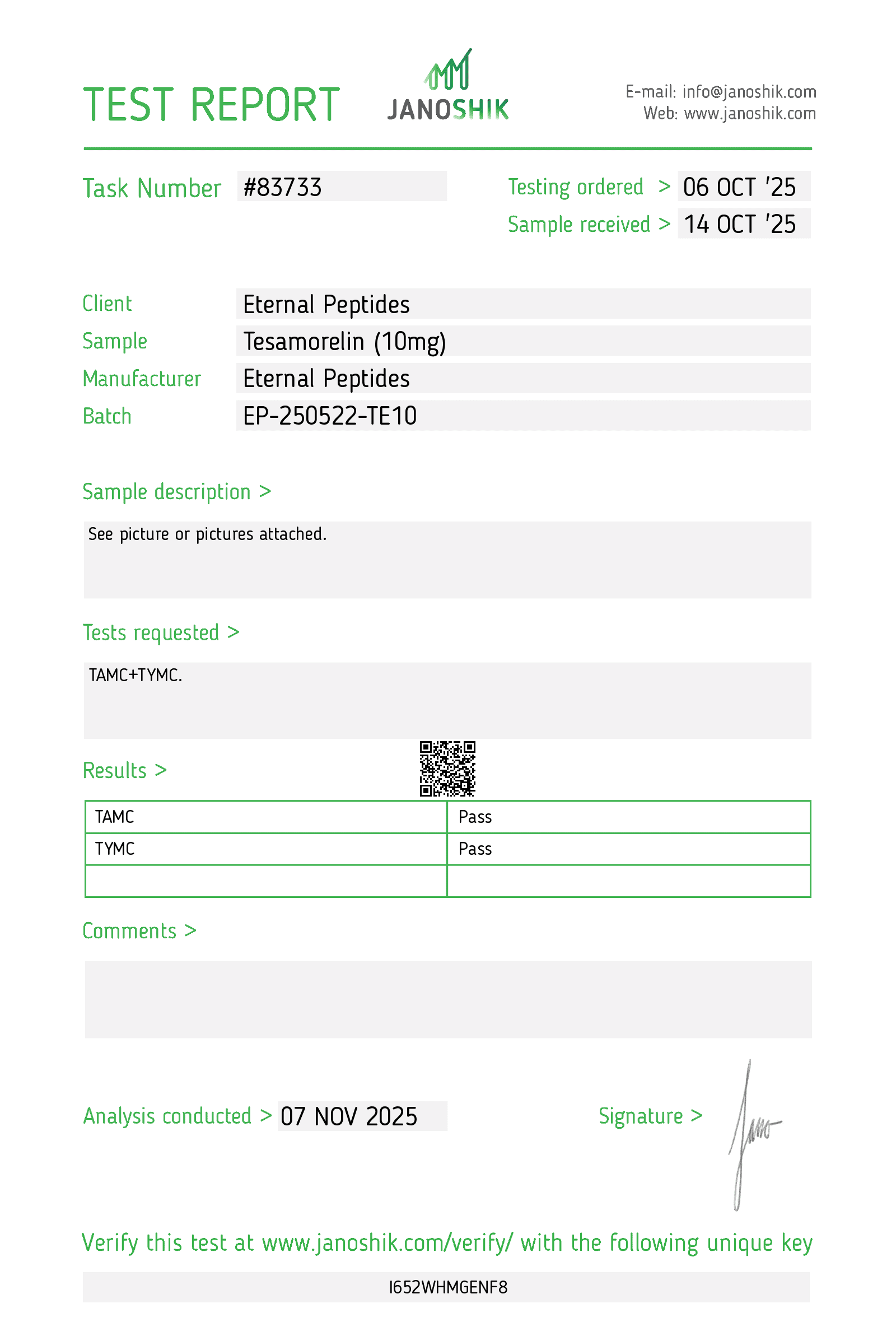
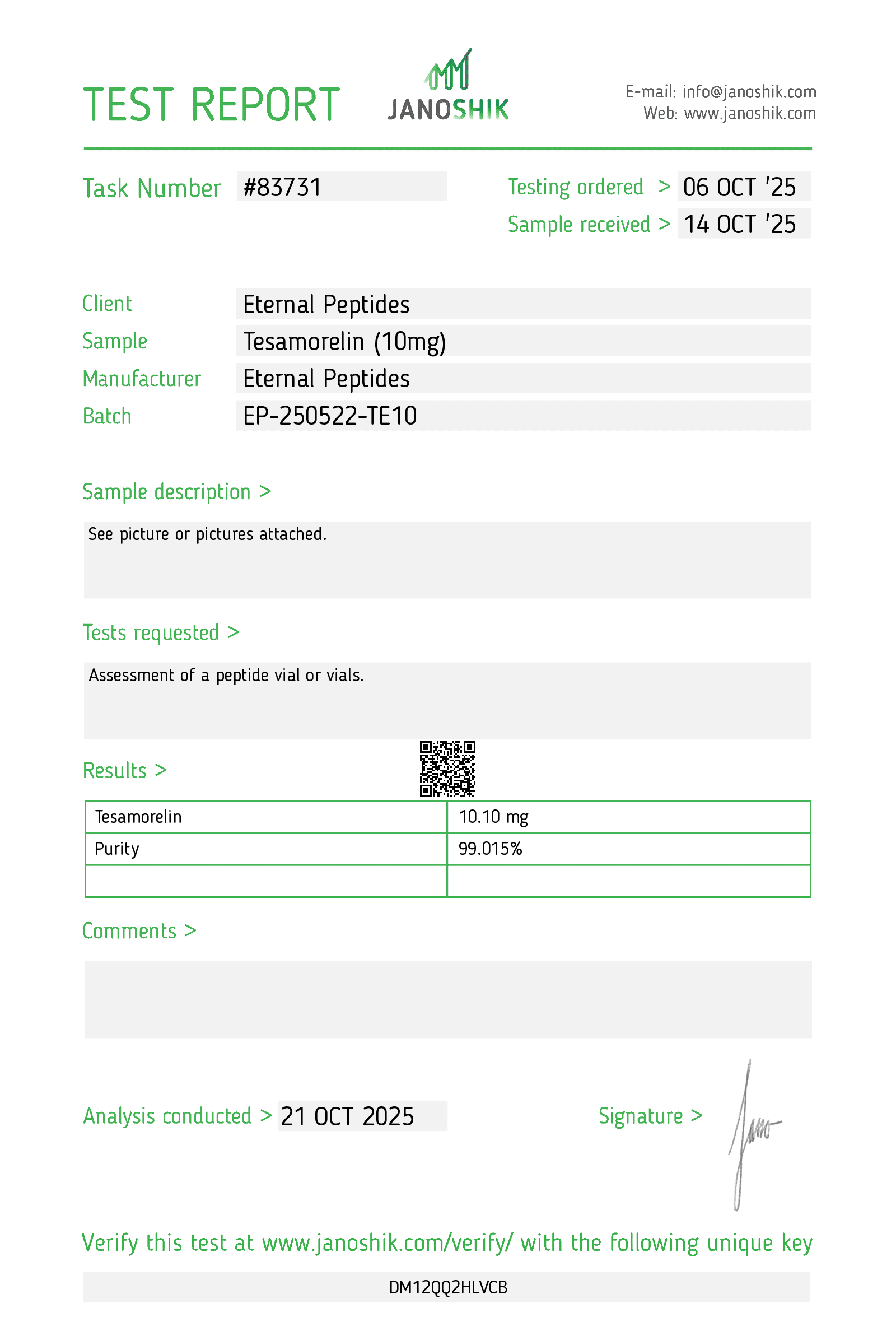
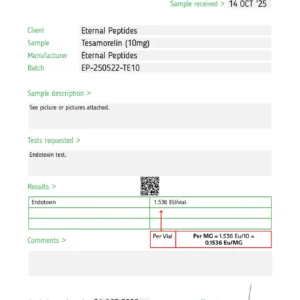
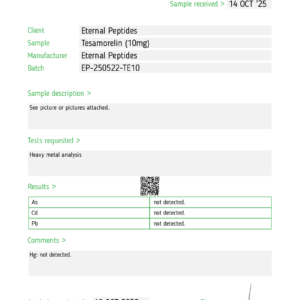
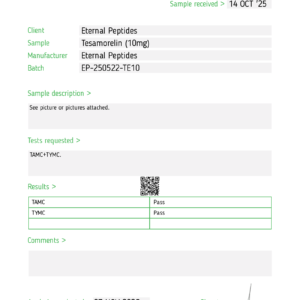
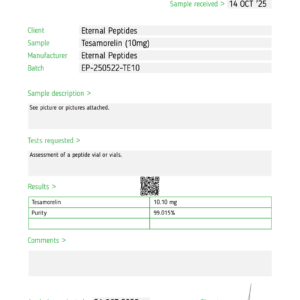
Rigorous Third-Party Testing
Every batch of our research chemicals and peptides undergoes
third-party testing.
*Disclaimer: This product is intended solely for laboratory research purposes. It is not suitable for consumption by humans, nor for medical, veterinary, or household purposes. Kindly review our Terms & Conditions before making a purchase.

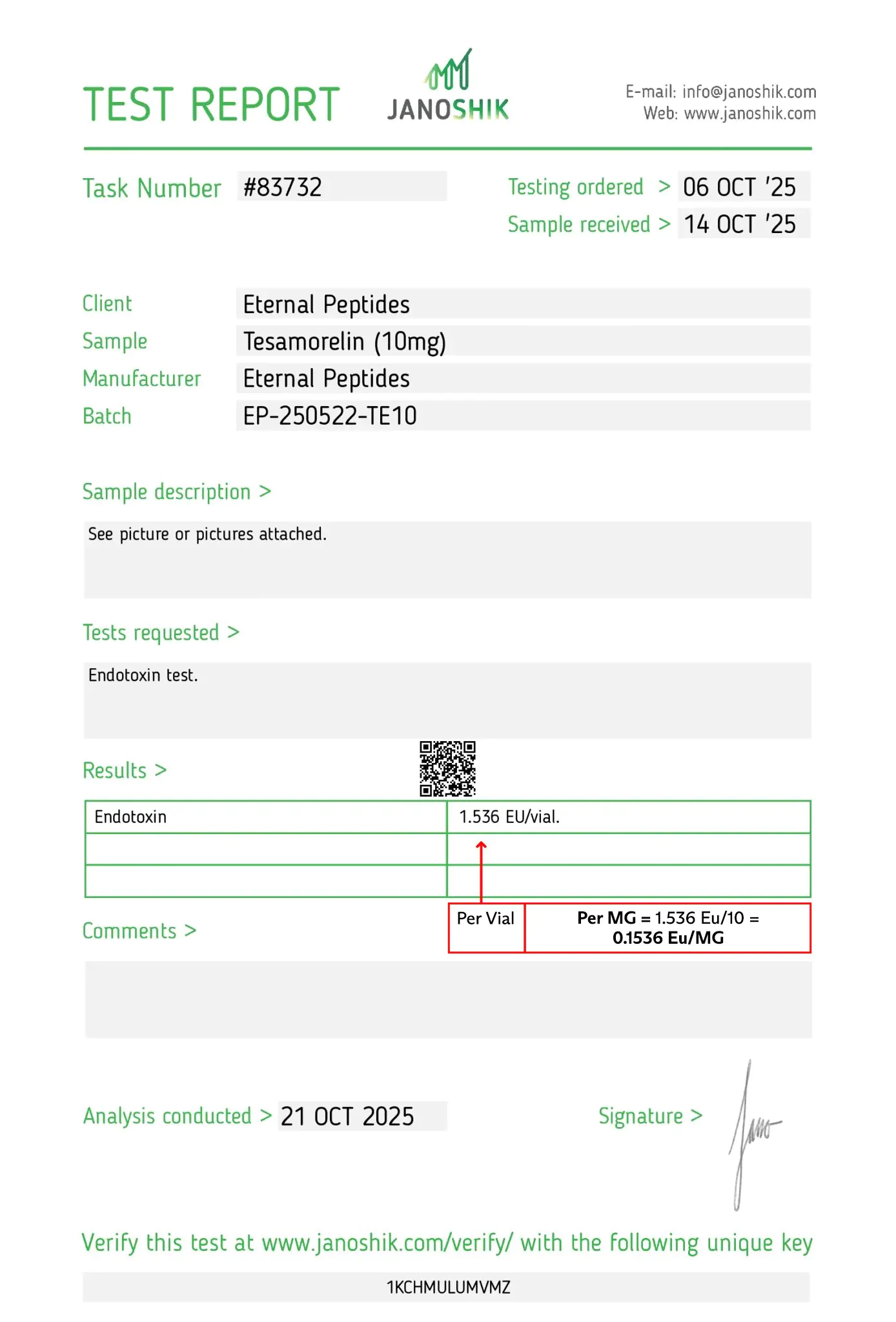
Always quality-tested, verified with third-party COAs
At every step, we prioritize quality by conducting rigorous third-party testing on all our products. These tests focus on five key characteristics- identity, purity, sterility, and endotoxin levels, and heavy metal content-ensuring that each product meets the highest standards of quality with independent third-party Certificates of Analysis (COAS) to verify our commitment to excellence.
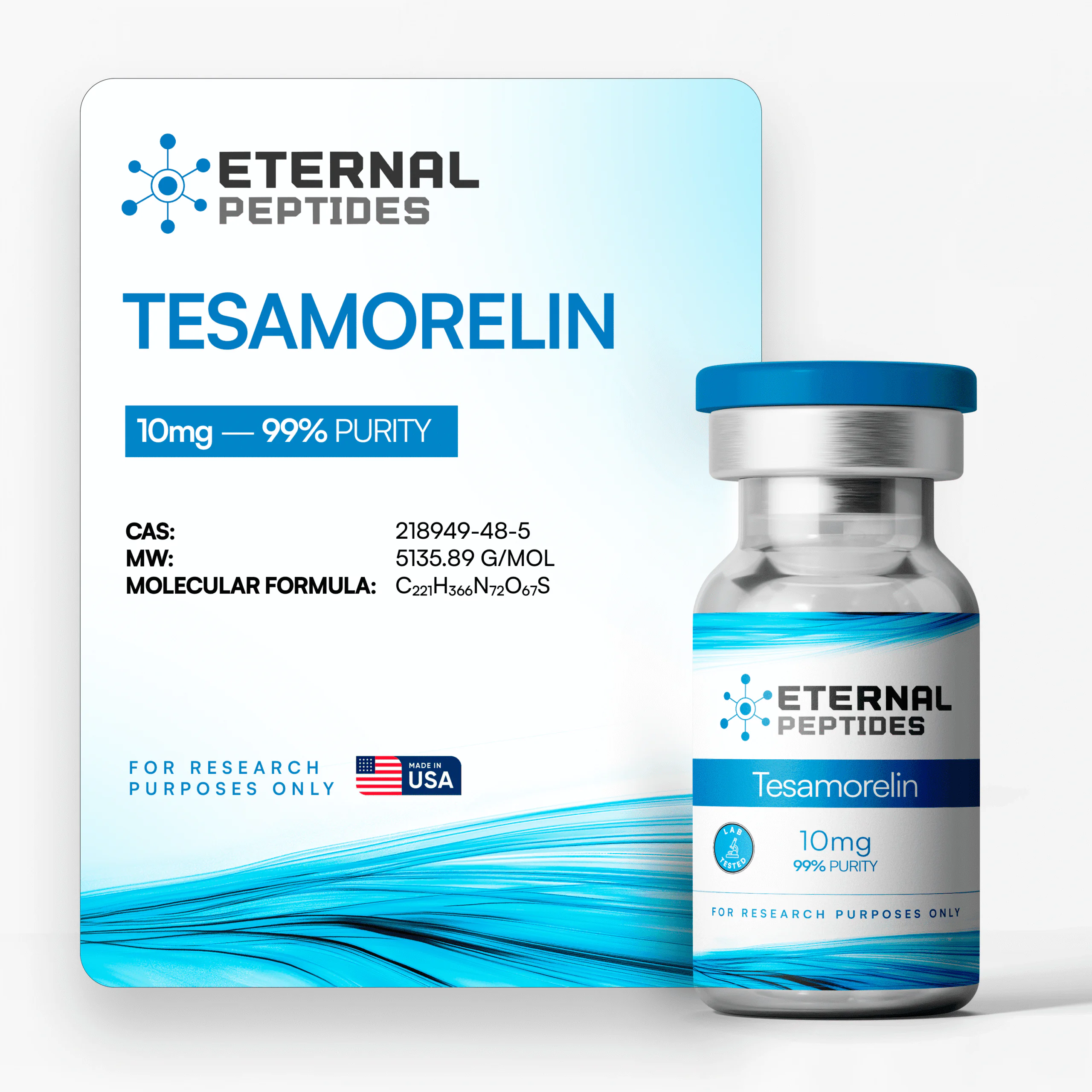
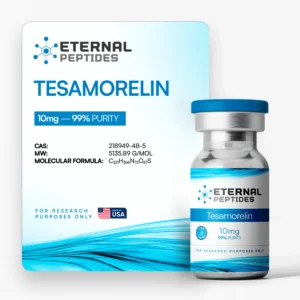
Shop premium-grade Tesamorelin 10mg from Eternal Peptides, a trusted U.S. source for verified research compounds. This synthetic GHRH analogue is manufactured to a purity standard of ≥99%, with every batch independently tested and certified by Janoshik Analytical. Tesamorelin is highly valued in research for its potential role in studying visceral adipose tissue reduction and metabolic regulation. Order today for fast, discreet U.S. shipping and free Priority delivery on all orders over $200.
What Is Tesamorelin?
Tesamorelin is a synthetic peptide analogue of growth hormone–releasing hormone (GHRH) composed of 44 amino acids and modified with a trans-3-hexenoic acid group attached to the N-terminus. Structurally, it functions as a stabilized and more potent form of the naturally occurring hypothalamic GHRH molecule.
Originally developed through research on endogenous growth factors, Tesamorelin was engineered to overcome the short stability of natural GHRH. The added N-terminal hexenoyl group helps resist enzymatic degradation, particularly by DPP-IV, which extends its half-life and improves bioavailability in research models compared with unmodified GHRH fragments.
In laboratory settings, Tesamorelin is primarily studied for its potential effects on metabolic signaling, lipid partitioning, and visceral fat regulation. Unlike many secretagogues researched mainly for muscle-related outcomes, Tesamorelin has received notable attention for studies involving HIV-associated lipodystrophy and ectopic fat reduction.
Mechanistically, Tesamorelin acts as a selective agonist of GHRH receptors located in the anterior pituitary. By activating these receptors, it stimulates synthesis and pulsatile release of endogenous growth hormone, which then influences downstream pathways including the insulin-like growth factor-1 (IGF-1) axis.
Most published findings come from in vitro, animal, and limited human studies investigating endocrine and metabolic pathways. While Tesamorelin has regulatory approval for specific medical uses, the compound described here is supplied strictly for laboratory research purposes only.
How Tesamorelin Works (Mechanism of Action)
Tesamorelin primarily functions as a selective analogue of growth hormone–releasing hormone (GHRH), engaging endocrine pathways involved in natural growth hormone regulation. Current mechanistic understanding comes from preclinical, animal, and limited human studies, describing a multi-step hormonal cascade rather than direct tissue-level action.
GHRH Receptor Activation in the Pituitary
Tesamorelin binds to GHRH receptors on somatotroph cells in the anterior pituitary. This receptor activation stimulates intracellular signaling that promotes synthesis and pulsatile release of endogenous growth hormone (GH). Unlike direct GH administration, this mechanism preserves physiological feedback control.
From a research standpoint, this is valuable because it allows investigators to study GH-related processes while maintaining endogenous regulatory systems. Its receptor-specific action also makes Tesamorelin useful for examining hypothalamic–pituitary axis dynamics in experimental models.
Stimulation of the Growth Hormone–IGF-1 Axis
Following pituitary GH release, downstream signaling activates the IGF-1 axis, primarily through hepatic production of insulin-like growth factor-1. IGF-1 is a major mediator of GH-related activity in tissues and is associated with protein synthesis, cellular turnover, and metabolic signaling.
Research interest in this pathway centers on tissue maintenance, adaptation, and endocrine balance. Tesamorelin is therefore often used as an upstream modulator in metabolic and hormonal studies.
Metabolic Signaling and Lipid Regulation
Preclinical and clinical findings suggest Tesamorelin-induced GH release may influence lipid metabolism, particularly in adipose tissue. Growth hormone signaling has been associated with increased lipolysis and altered fat distribution, making Tesamorelin a valuable tool in metabolic research.
This mechanism is relevant for understanding how hormonal signaling affects energy balance, body composition, and fat storage through endogenous pathways rather than direct hormone replacement.
Preservation of Physiological Feedback Mechanisms
A key mechanistic feature of Tesamorelin is that it retains normal negative feedback regulation within the hypothalamic–pituitary system. Rising GH and IGF-1 levels naturally reduce further release, helping prevent continuous overstimulation.
This preservation of feedback is important in research because it more closely reflects natural endocrine physiology. It enables investigators to study hormonal adaptation, tolerance, and signaling dynamics under biologically realistic conditions.
Indirect Effects on Tissue Maintenance Pathways
Although Tesamorelin does not act directly on peripheral tissues, downstream GH and IGF-1 signaling may influence cellular repair, turnover, and structural maintenance across multiple tissue types. These effects are indirect and depend on tissue type and study conditions.
Tesamorelin’s mechanistic profile should always be interpreted strictly within a research context and not as an established therapeutic effect.
Related Products
Related products

,