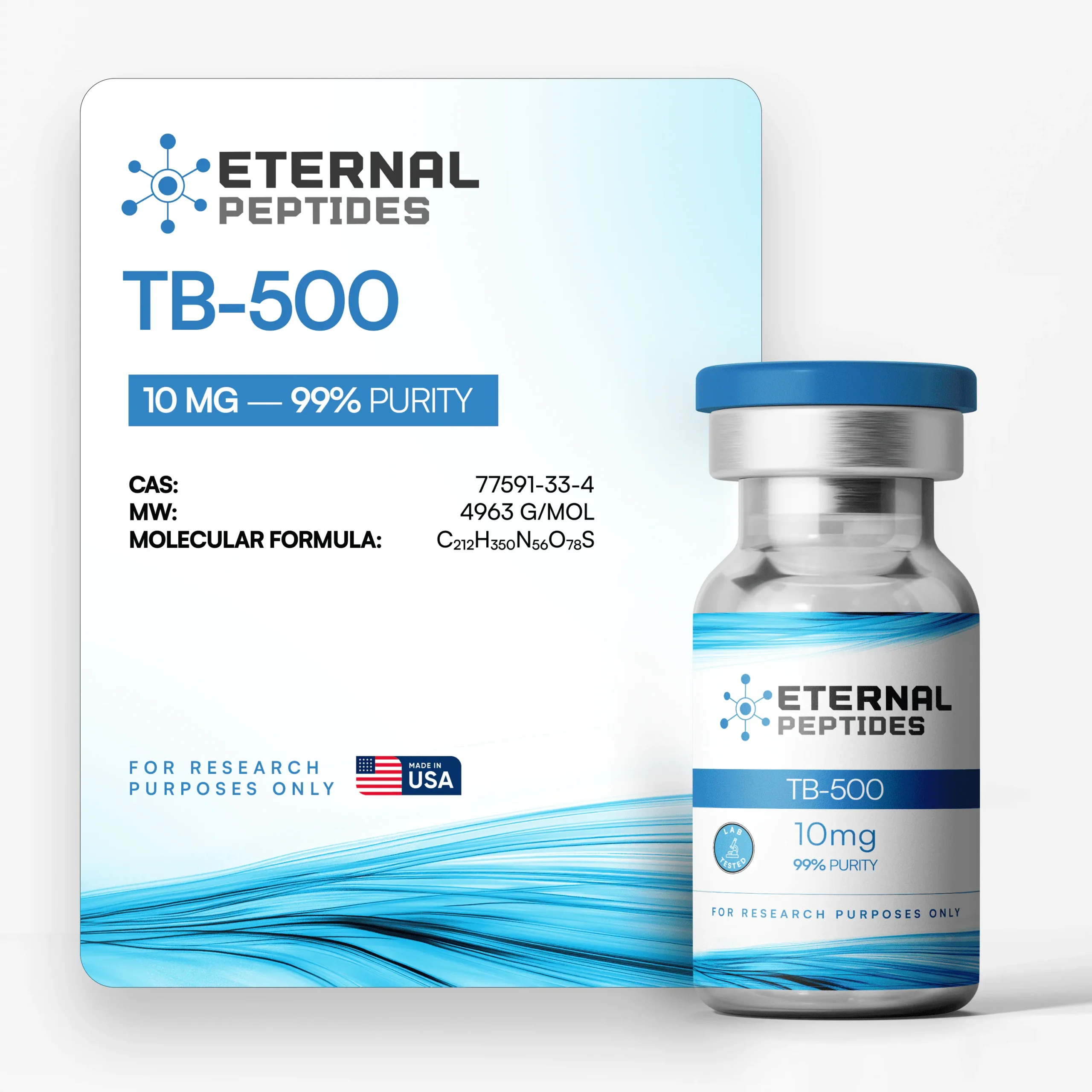
TB-500
$44.99 – $74.99Price range: $44.99 through $74.99
Discount per Quantity
| Quantity | Discount | Price |
|---|---|---|
| 5 – 10 | 5% | $71.24 |
| 11 – 20 | 10% | $67.49 |
| 21+ | 15% | $63.74 |
Guaranteed
Ordering
Tested
Tracking
Commitment
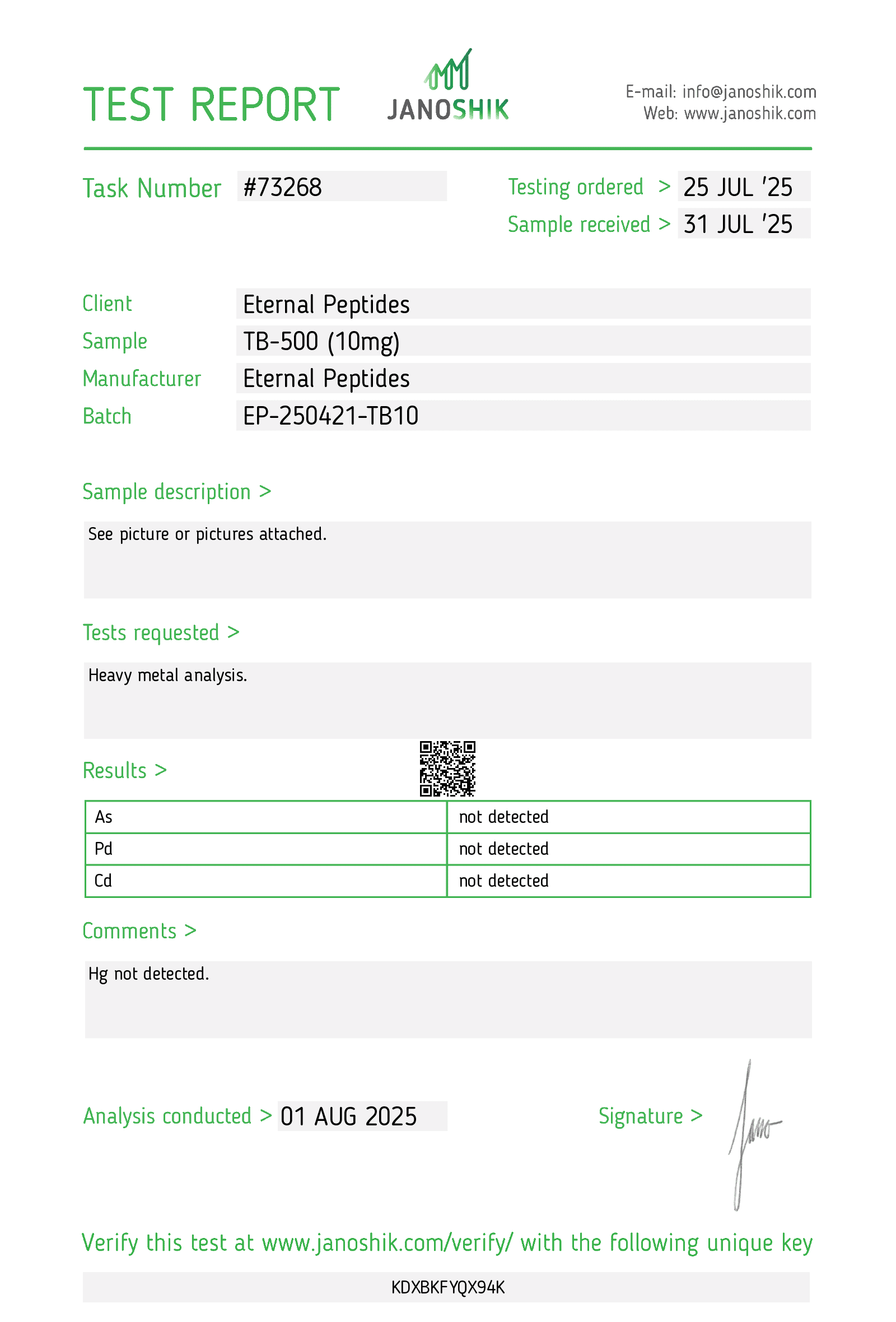
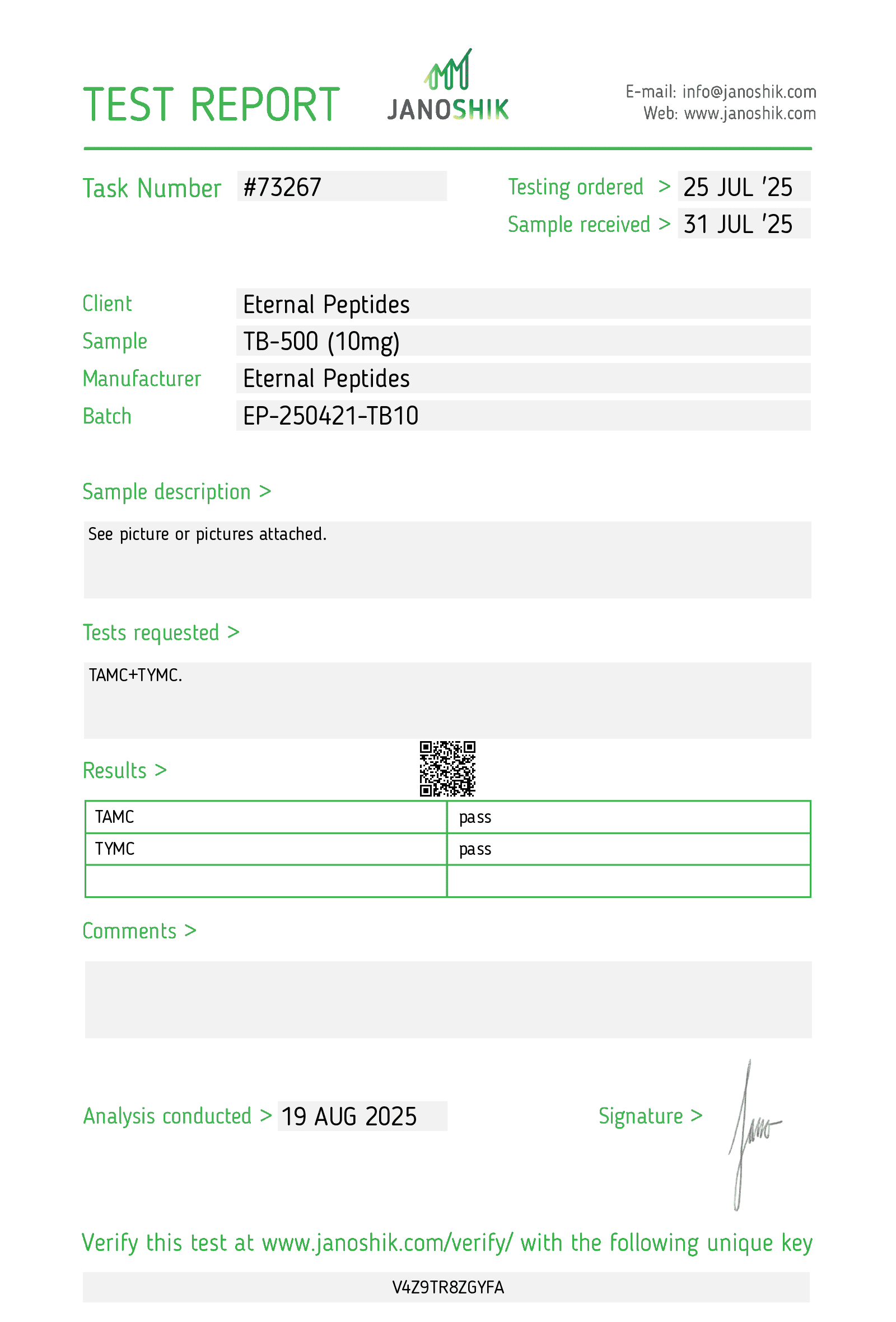
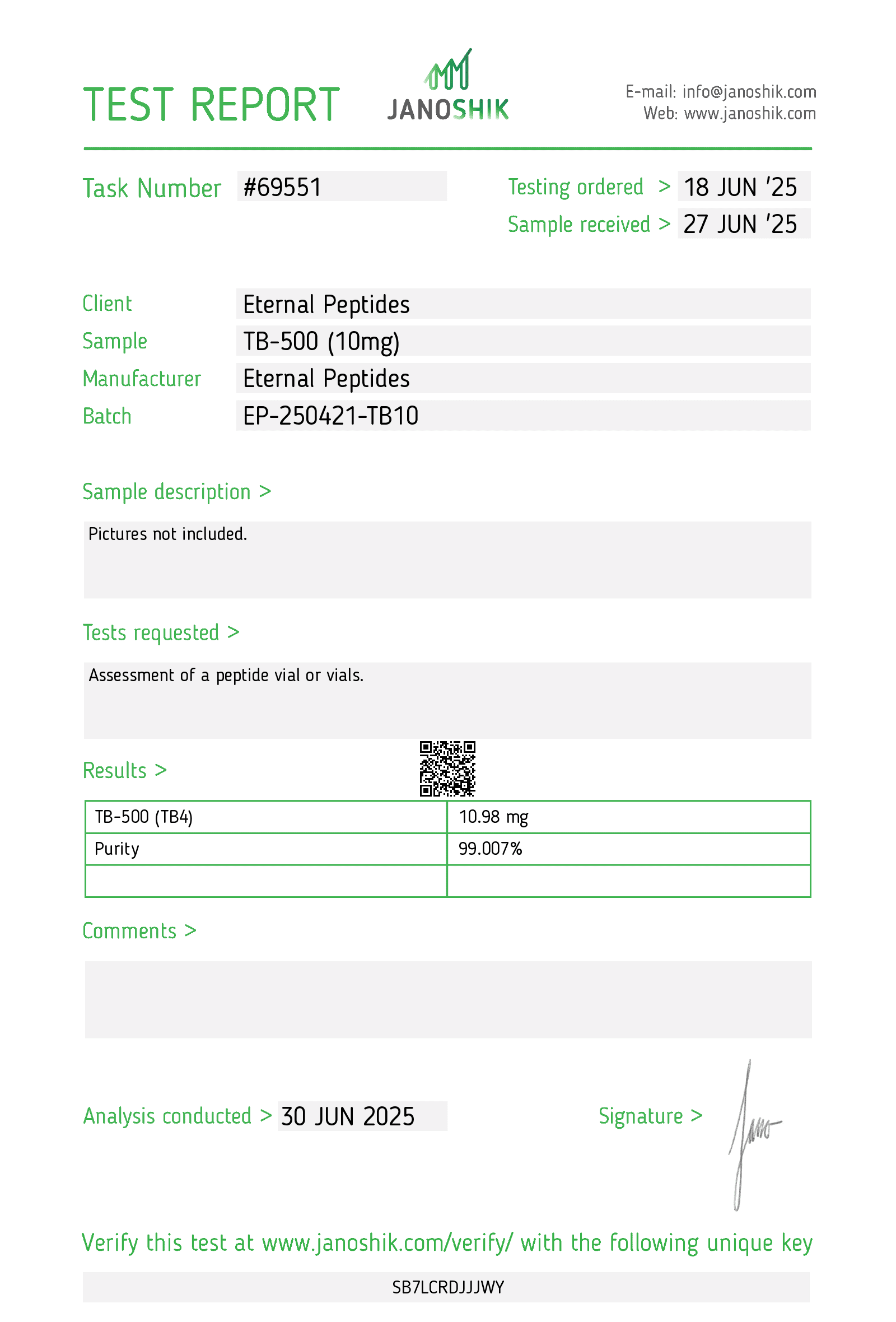
Rigorous Third-Party Testing
Every batch of our research chemicals and peptides undergoes
third-party testing.
*Disclaimer: This product is intended solely for laboratory research purposes. It is not suitable for consumption by humans, nor for medical, veterinary, or household purposes. Kindly review our Terms & Conditions before making a purchase.

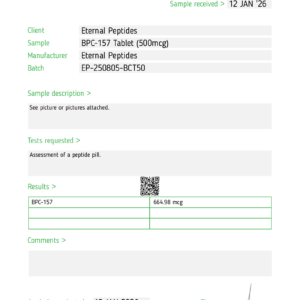
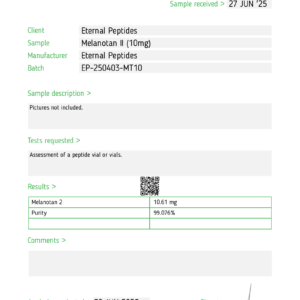
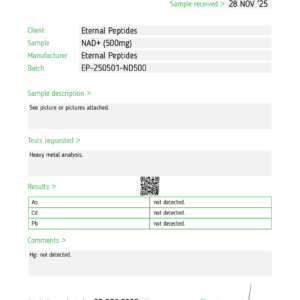
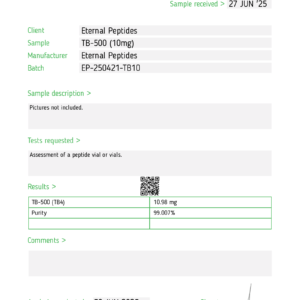
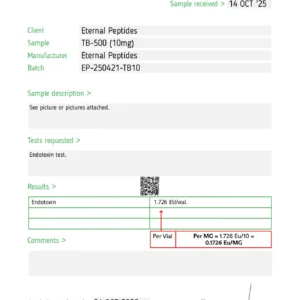
Always quality-tested, verified with third-party COAs
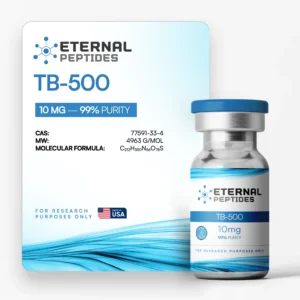
At every step, we prioritize quality by conducting rigorous third-party testing on all our products. These tests focus on five key characteristics- identity, purity, sterility, and endotoxin levels, and heavy metal content-ensuring that each product meets the highest standards of quality with independent third-party Certificates of Analysis (COAS) to verify our commitment to excellence.
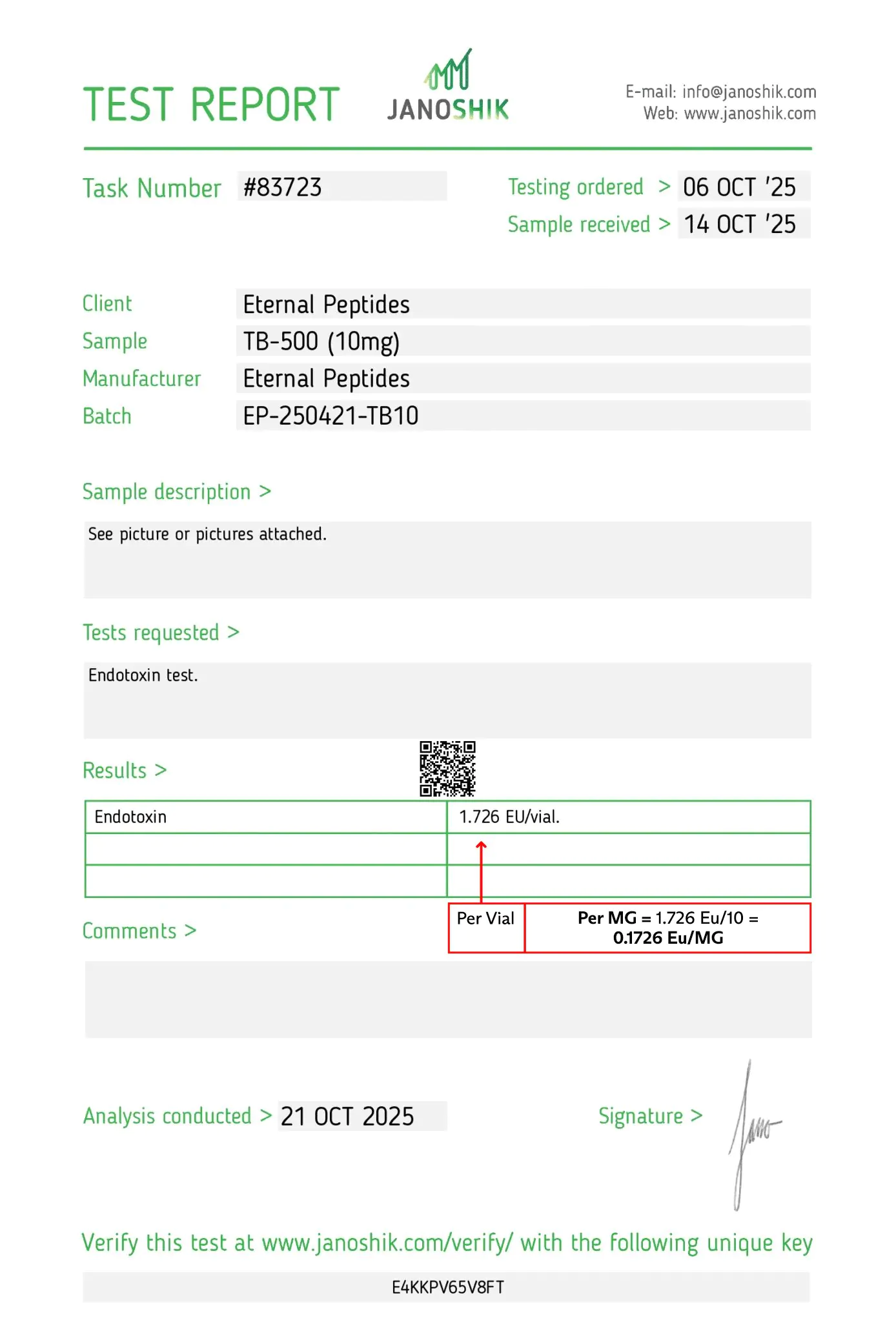
Shop high-purity TB-500 from Eternal Peptides, a trusted U.S. supplier of verified research compounds. This synthetic thymosin beta-4 analogue is produced to a purity standard of ≥99%, with every batch independently tested and certified by Janoshik Analytical. TB-500 is widely used in research focused on actin dynamics, cellular migration, and angiogenesis signaling pathways. Order today for fast, secure U.S. shipping and free Priority delivery on all orders over $200.
What Is TB-500?
TB-500 is a synthetic research peptide modeled after thymosin beta-4 (Tβ4), a naturally occurring 43–amino acid peptide found in mammalian tissues. It is considered a synthetic analogue or fragment-based derivative designed to replicate key biological functions of the endogenous protein.
Thymosin beta-4 was originally identified as an intracellular actin-binding protein involved in cytoskeletal organization and cell movement.
In scientific literature, TB-500 and thymosin beta-4 are primarily studied for their roles in tissue repair, wound healing, angiogenesis, and inflammatory regulation. Most available evidence comes from in vitro and animal studies exploring musculoskeletal, vascular, and epithelial tissue responses.
Mechanistically, TB-500-related peptides are associated with regulation of actin structure, promotion of cell migration, and modulation of angiogenesis and inflammatory signaling pathways.
These findings should be interpreted strictly as preclinical research observations. TB-500 is not approved for human or veterinary clinical use.
How TB-500 Works (Mechanism of Action)
TB-500 is considered a pleiotropic research peptide, meaning it may influence multiple biological pathways simultaneously. Current mechanistic understanding is derived primarily from in vitro and animal studies investigating cellular repair, inflammation, and tissue remodeling processes.
Actin Binding and Cell Migration
One of the most studied mechanisms linked to TB-500 is its role in actin regulation. As a thymosin beta-4–derived analogue, TB-500 is associated with actin sequestration, a process that controls cytoskeletal organization within cells. Actin remodeling is essential for cell shape, movement, and division.
In preclinical models, this activity has been associated with enhanced cellular migration, particularly in fibroblasts, endothelial cells, and progenitor cells. Cell migration is a critical step in tissue repair because it allows cells to reach sites of injury and contribute to structural recovery.
Angiogenesis and Vascular Support
Research suggests TB-500-related activity may influence angiogenic signaling, the process through which new blood vessels form from existing ones. Angiogenesis is important in tissue repair models because it improves oxygen and nutrient delivery to regenerating tissue.
These pathways are often studied alongside other peptides in research exploring vascular regeneration and soft tissue repair. Animal and cell-based studies suggest thymosin beta-4 activity may support endothelial cell survival and regulate pro-angiogenic signaling factors.
Inflammatory Modulation
TB-500 has also been investigated for its potential role in modulating inflammatory responses in preclinical models. While inflammation is necessary for tissue response, excessive or prolonged inflammation can slow recovery processes.
Research suggests TB-500-related pathways may influence cytokine activity and immune cell behavior, contributing to a more regulated inflammatory environment in damaged tissues. Rather than suppressing immunity, this modulation is thought to help maintain balance during repair processes.
Cytoprotection and Tissue Remodeling
Another area of interest is cytoprotection and tissue remodeling. TB-500-associated activity has been linked to reduced apoptosis (cell death) under stress conditions and improved cellular survival signaling in environments affected by mechanical or oxidative stress.
Studies also suggest involvement in extracellular matrix organization and collagen alignment, both of which are essential for restoring tissue structure. Proper remodeling helps ensure repaired tissue is organized and functional rather than disordered or fibrotic.
TB-500 Research Value
TB-500 is studied in laboratory settings to better understand how cells respond to injury, migrate, and rebuild tissue structure. Key areas of research include:
- Cell migration and actin regulation, focusing on how cells move and reorganize during injury responses
- Tissue repair signaling, examining coordinated cellular responses to structural damage
- Angiogenesis pathways, studying how blood vessel formation supports tissue recovery
- Muscle and connective tissue models, analyzing responses to mechanical stress and strain
- Inflammatory regulation, investigating how signaling changes during tissue stress
- Cellular resilience and remodeling, exploring how tissues restore structure after damage
These research areas are strictly experimental and should not be interpreted as clinical effects.