
PT-141 (10mg)
$70.00 Original price was: $70.00.$59.99Current price is: $59.99.
Discount per Quantity
| Quantity | Discount | Price |
|---|---|---|
| 5 – 10 | 5% | $56.99 |
| 11 – 20 | 10% | $53.99 |
| 21+ | 15% | $50.99 |
Guaranteed
Ordering
Tested
Tracking
Commitment
Rigorous Third-Party Testing
Every batch of our research chemicals and peptides undergoes
third-party testing.
*Disclaimer: This product is intended solely for laboratory research purposes. It is not suitable for consumption by humans, nor for medical, veterinary, or household purposes. Kindly review our Terms & Conditions before making a purchase.

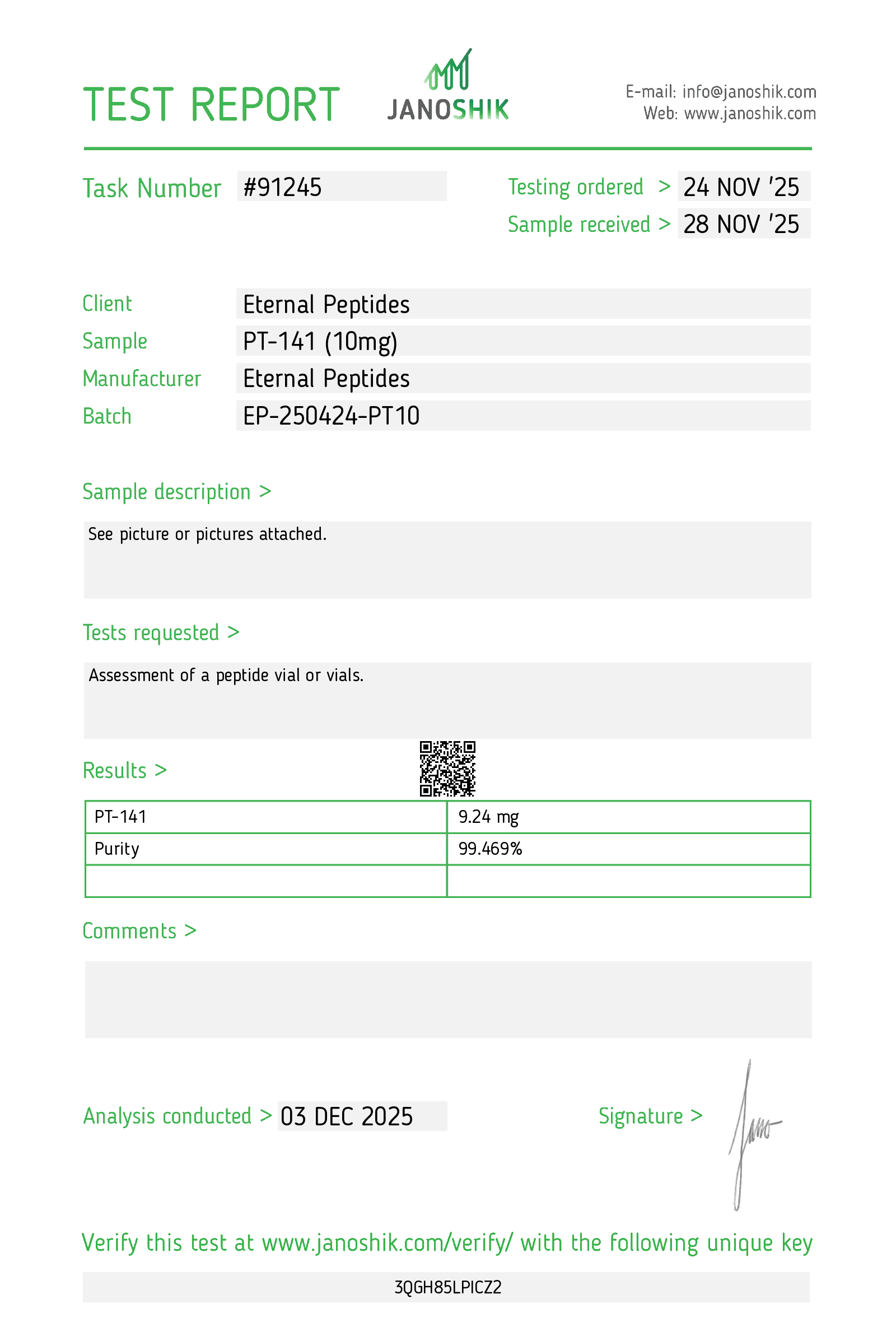
Always quality-tested, verified with third-party COAs
At every step, we prioritize quality by conducting rigorous third-party testing on all our products. These tests focus on five key characteristics- identity, purity, sterility, and endotoxin levels, and heavy metal content-ensuring that each product meets the highest standards of quality with independent third-party Certificates of Analysis (COAS) to verify our commitment to excellence.
Buy PT-141 10mg from Eternal Peptides, a reputable U.S.-based source of research compounds validated through independent third-party laboratory testing and Certificates of Analysis (COAs). PT-141, also called Bremelanotide, is a melanocortin receptor agonist peptide commonly examined in laboratory environments for its influence on central nervous system signaling pathways. Every PT-141 10mg batch is tested to confirm 99%+ purity, offered at competitive rates, and qualifies for free USPS Priority shipping on orders above $200. Intended strictly for research use only.
What is PT-141 (Bremelanotide)?
PT-141, known scientifically as bremelanotide, is a synthetic cyclic heptapeptide created from compounds that target melanocortin receptors. It was structurally developed from Melanotan II (MT-II), which itself originated from alpha-melanocyte stimulating hormone (α-MSH), a naturally occurring peptide produced through cleavage of proopiomelanocortin (POMC).
Compared with earlier melanocortin analogs, PT-141 was engineered to lessen unwanted peripheral effects while maintaining activity in the central nervous system. This made it a more refined research compound for studying melanocortin signaling.
PT-141 primarily acts as an agonist at MC3R and MC4R receptor subtypes. These receptors are found in important CNS regions such as the hypothalamus, limbic system, and brainstem, where they participate in energy regulation, autonomic function, and behavioral signaling.
Among these receptors, MC4R has received the most attention in research because of its role in hypothalamic pathways linked to neuroendocrine activity and autonomic nervous system responses. It is considered the main receptor through which PT-141 produces centrally mediated effects in preclinical studies.
Originally, PT-141 emerged from studies exploring melanocortin pathways involved in pigmentation and hormonal signaling. Later investigations shifted toward central arousal pathways and behavioral responses after findings in animal studies and early human trials.
Unlike PDE5 inhibitors, which mainly work through peripheral vascular smooth muscle relaxation, PT-141 is believed to act centrally through the nervous system. This distinction has made it valuable in receptor-level and neuropharmacology research.
Scientific studies have evaluated PT-141 in areas such as hypothalamic melanocortin signaling, autonomic activation, and behavioral modulation. Preclinical models have used it to study MC3R and MC4R receptor function, while early human trials have helped characterize pharmacokinetics and central activity. Additional laboratory work has explored receptor affinity, subtype selectivity, and downstream signaling behavior.
This PT-141 10mg lyophilized formulation is independently verified by laboratories such as Janoshik and Finnrick, and includes a lot-specific COA for transparency. Its freeze-dried format supports stability during storage and precise reconstitution for controlled research settings.
How PT-141 Works: Mechanistic Overview
PT-141 is best described as a centrally acting melanocortin receptor agonist. Its primary mechanism involves stimulation of melanocortin receptors, especially MC4R and to a lesser extent MC3R. Through this activity, PT-141 may alter hypothalamic and limbic signaling pathways that influence measurable arousal-related behaviors and autonomic outputs in preclinical models.
Early translational and animal studies helped establish PT-141 as a useful tool for investigating melanocortin-linked CNS circuits rather than peripheral vasodilation pathways.
CNS Melanocortin Receptor Activation (MC4R / MC3R)
PT-141 binds melanocortin receptors located in the brain, with emphasis on MC4R-related signaling pathways. In rodent and primate studies, receptor activation has been associated with hypothalamic neuronal responses and measurable changes in solicitation behaviors and erectile response markers.
In cellular assays, receptor stimulation enables researchers to examine melanocortin signaling processes such as receptor sensitivity, second-messenger activation, and interactions with neuroendocrine systems.
Simply put, PT-141 is used to study how melanocortin receptor stimulation translates into measurable physiological and behavioral outcomes.
Downstream Neurotransmitter & Autonomic Effects
Current mechanistic models suggest that melanocortin receptor activation may influence downstream neurotransmitter systems involved in motivation and arousal, particularly dopaminergic pathways in the hypothalamus.
Animal research has also reported autonomic effects linked to genital response and cardiovascular parameters, without relying mainly on nitric oxide–mediated vasodilation.
Because PT-141 is not completely subtype-selective, some off-target melanocortin activity (such as MC1R stimulation) may help explain pigmentation-related effects seen in certain settings.
Although limited human clinical evidence exists, broader conclusions should remain confined to controlled research environments.
PT-141 Research Value (Applications)
Preclinical PT-141 research mainly focuses on melanocortin receptor signaling, behavioral responses, and autonomic regulation. Most findings come from animal models, receptor assays, and laboratory studies, and do not imply proven human or veterinary outcomes.
PT-141 is supplied by Eternal Peptides for research use only.
Central Arousal & Behavioral Models
PT-141 has been widely investigated in rodent and nonhuman primate models examining melanocortin receptor-mediated behavioral changes. Activation of MC4R pathways in the hypothalamus has been associated with measurable differences in solicitation behavior, mating patterns, and erectile response frequency.
These outcomes are generally measured using standardized scoring methods and markers of neuronal activation.
Neuroendocrine & Autonomic Regulation
MC4R is well recognized in preclinical literature as a regulator of sympathetic nervous system activity and cardiovascular responses. Central MC4R activation has been linked to changes in heart rate, blood pressure, and sympathetic tone in multiple animal studies.
As an MC4R agonist, PT-141 operates within this same signaling framework, and cardiovascular parameters were monitored during early clinical pharmacology research.
In simple terms, PT-141 helps researchers explore how central receptor activation may influence autonomic and hormonal signaling systems.
Energy Balance & Appetite Studies
Melanocortin receptors, particularly MC4R, are known regulators of appetite and energy homeostasis. In animal research, melanocortin agonists have influenced feeding behavior and body weight variables, though results depend on dose, duration, and receptor subtype engagement.
PT-141 has therefore been used experimentally to study how central receptor activation affects food intake and metabolic regulation.
Human evidence in this area remains limited, and most conclusions come from preclinical models.
PT-141 Peptide Characteristics
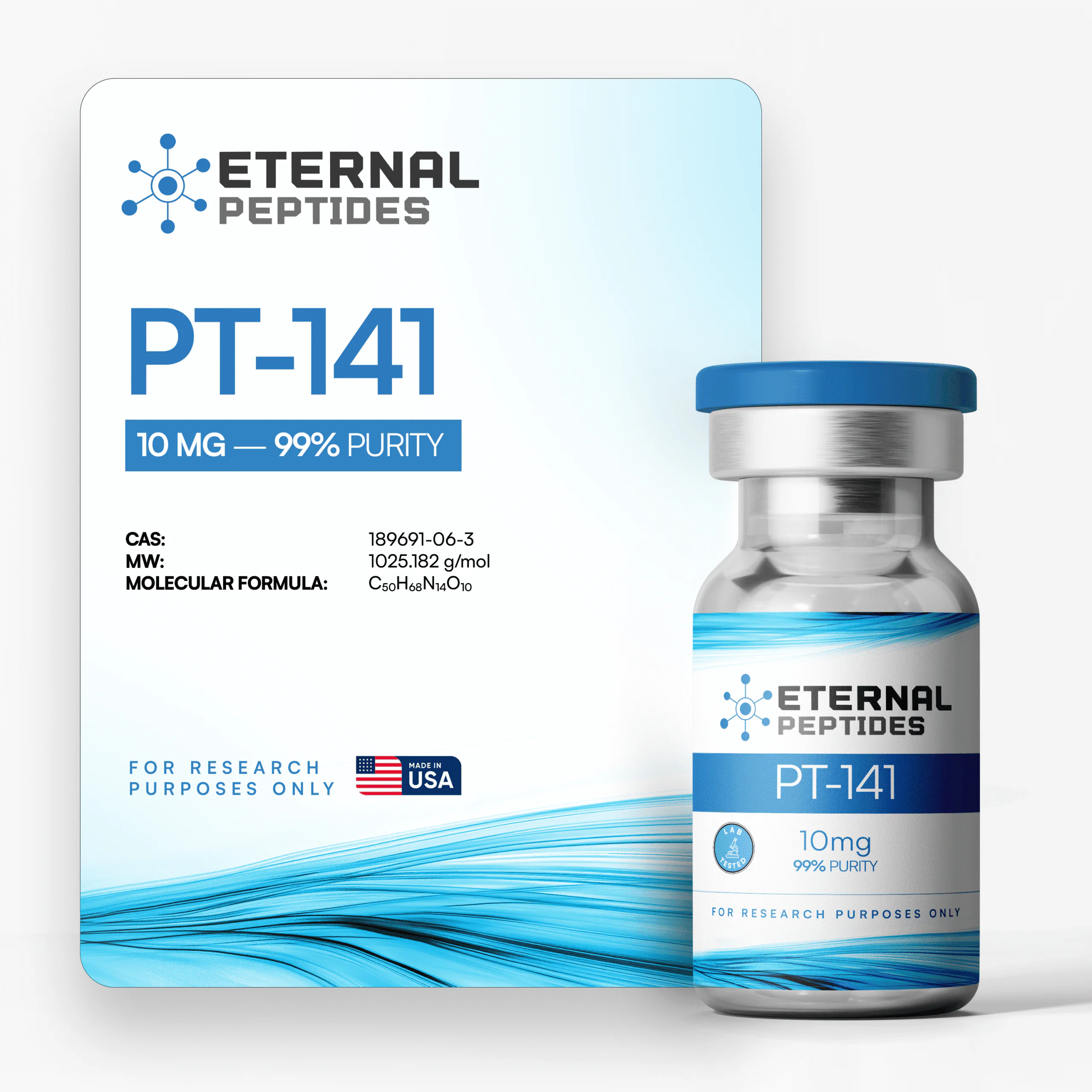
| Property | Description |
|---|---|
| Name | PT-141 (Bremelanotide) |
| Sequence | Ac-Nle-cyclo[Asp-His-D-Phe-Arg-Trp-Lys]-OH |
| Molecular Formula | C₅₀H₆₈N₁₄O₁₀ |
| Molecular Weight | ~1025.2 g/mol |
| PubChem CID | 9941379 |
| Form | Lyophilized powder in sterile vials |
| Purity | Typically ≥99% with third-party verification |
| Solubility | Soluble in sterile or bacteriostatic water |
| Structure | Cyclic peptide with modified amino acids |
Storage & Handling
To maintain stability and research consistency:
- Store unreconstituted vials refrigerated at 2–8°C
- Freeze for longer storage
- Protect from moisture, heat, and light
- Reconstitute using sterile or bacteriostatic water
- Swirl gently; avoid shaking
- Use aliquots if multiple uses are planned
- Reduce repeated freeze-thaw cycles
- Handle with proper PPE and laboratory protocols
COA / Quality Assurance
Each PT-141 lot includes a batch-specific COA with:
- Identity confirmation via HPLC / mass spectrometry
- Purity verification
- Sterility screening where applicable
- Endotoxin analysis
- Recommended storage conditions
Independent testing partners include Janoshik and other qualified laboratories.
Legal Disclaimer
PT-141 is supplied strictly for laboratory research purposes only. It is not approved for human use, veterinary use, therapeutic treatment, or diagnostic applications. Buyers are responsible for complying with all local laws, regulations, and institutional research policies.
Related Products
Related products
,