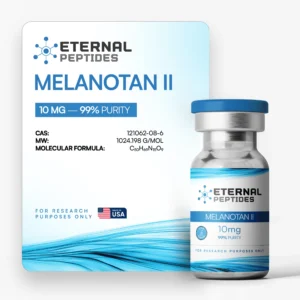
Melanotan II (10mg)
$60.00 Original price was: $60.00.$54.99Current price is: $54.99.
Discount per Quantity
| Quantity | Discount | Price |
|---|---|---|
| 5 – 10 | 5% | $52.24 |
| 11 – 20 | 10% | $49.49 |
| 21+ | 15% | $46.74 |
Guaranteed
Ordering
Tested
Tracking
Commitment
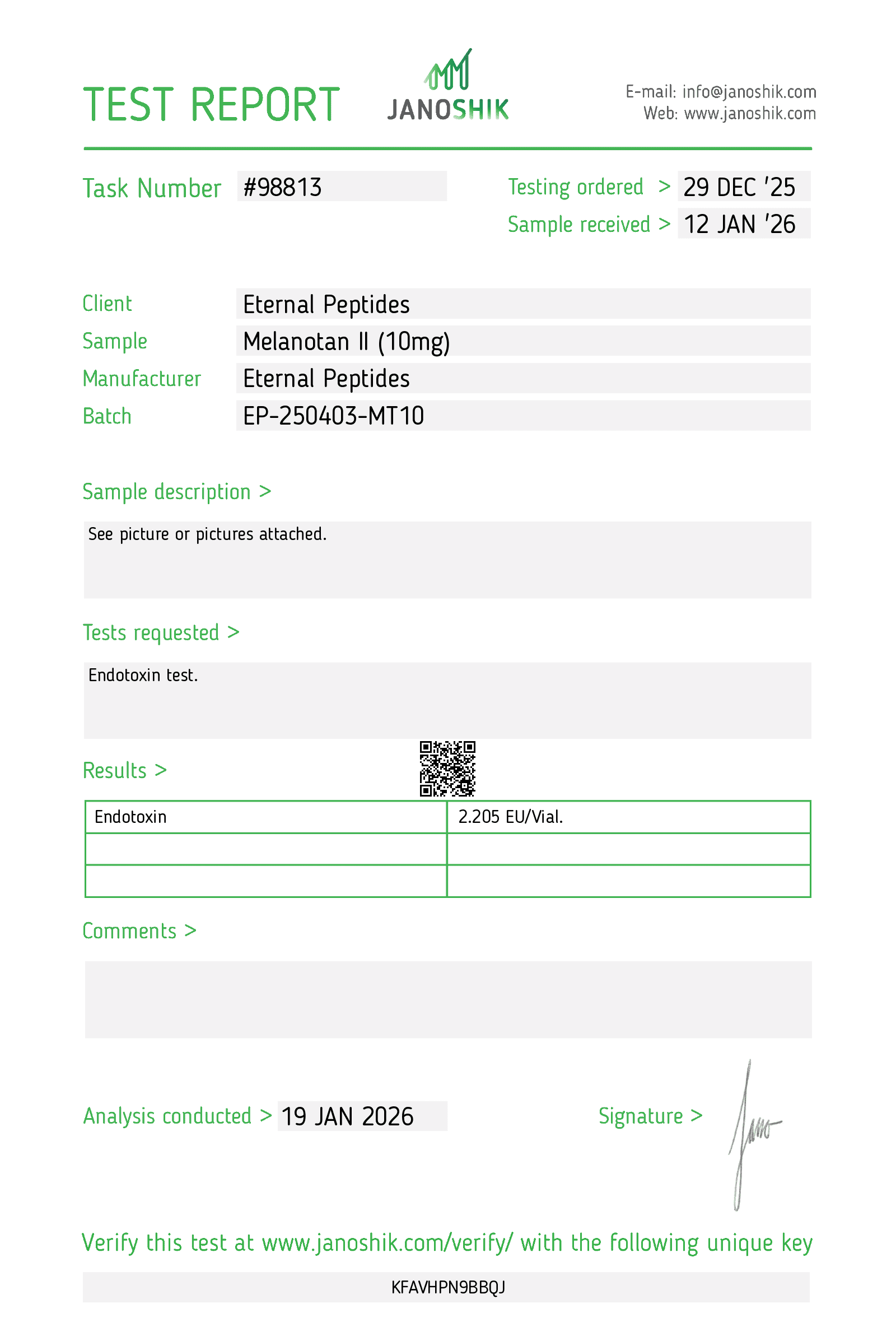
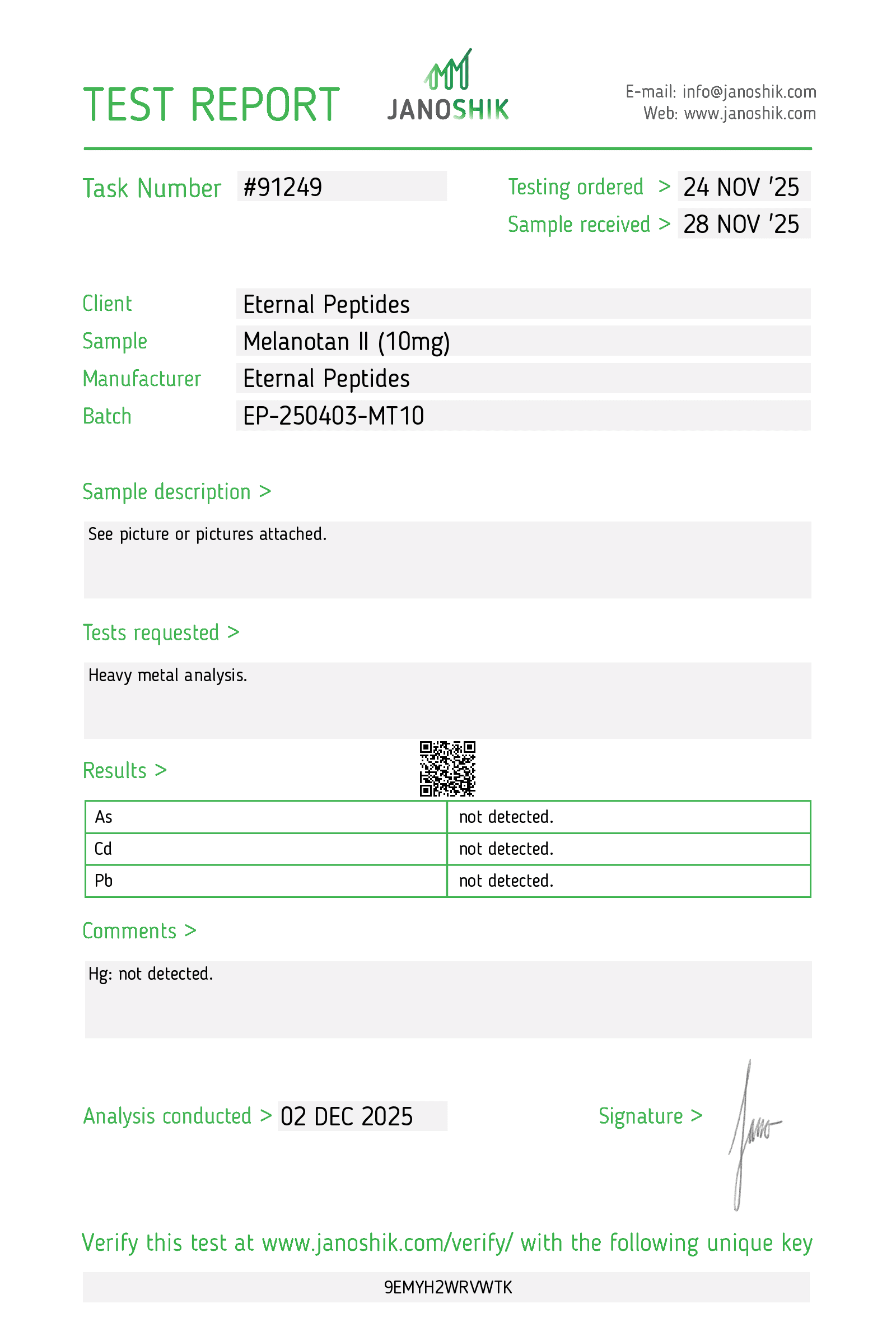
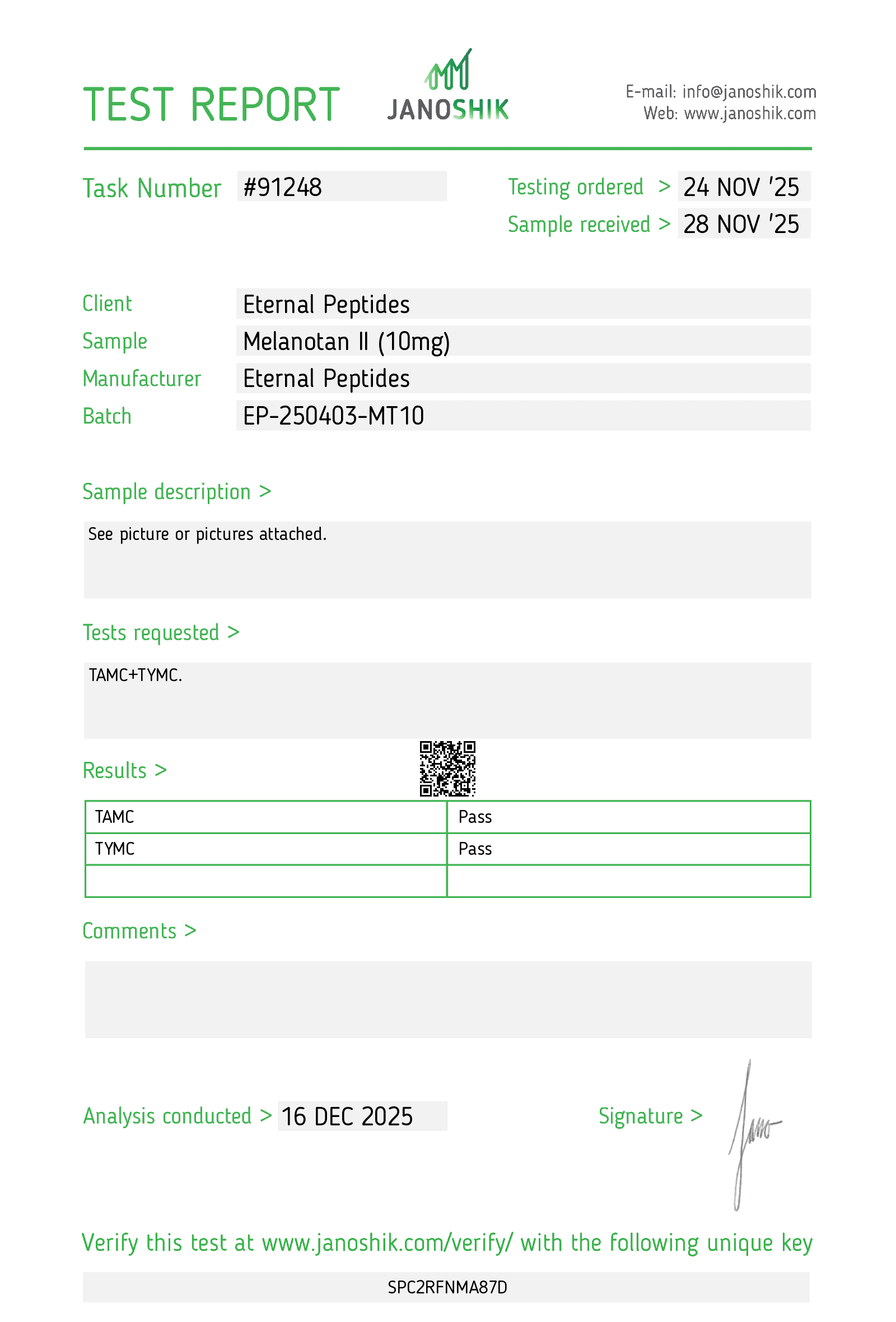
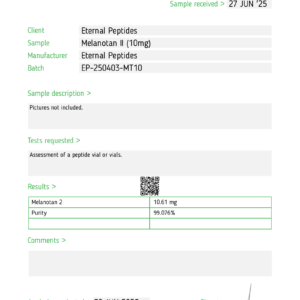
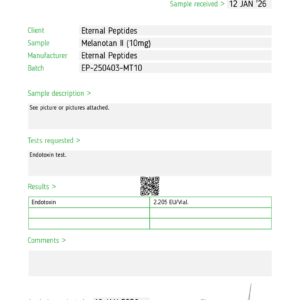
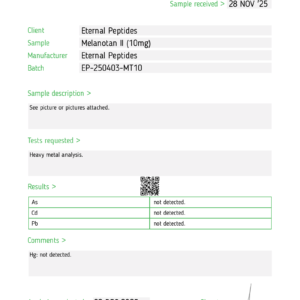
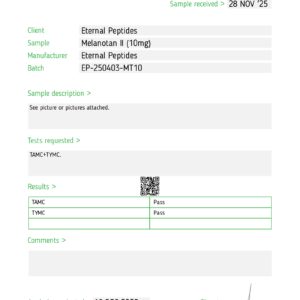
Rigorous Third-Party Testing
Every batch of our research chemicals and peptides undergoes
third-party testing.
*Disclaimer: This product is intended solely for laboratory research purposes. It is not suitable for consumption by humans, nor for medical, veterinary, or household purposes. Kindly review our Terms & Conditions before making a purchase.

Always quality-tested, verified with third-party COAs
At every step, we prioritize quality by conducting rigorous third-party testing on all our products. These tests focus on five key characteristics- identity, purity, sterility, and endotoxin levels, and heavy metal content-ensuring that each product meets the highest standards of quality with independent third-party Certificates of Analysis (COAS) to verify our commitment to excellence.
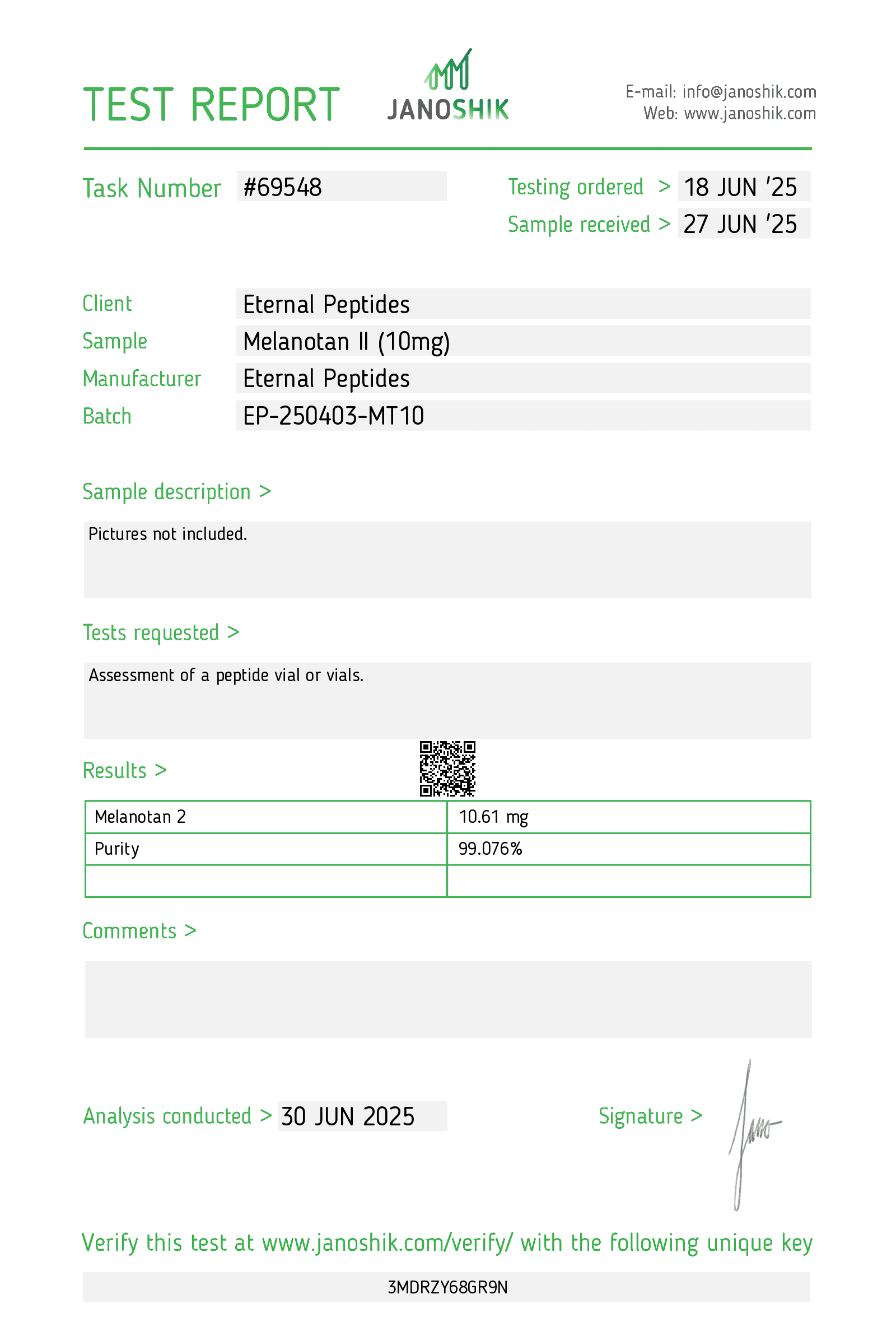
Shop high-purity Melanotan II 10mg at Eternal Peptides, a trusted U.S. supplier of verified research compounds. This synthetic melanocortin analogue is manufactured to a standard of ≥99% purity, with every batch independently tested by third-party laboratories such as Janoshik. Melanotan II is widely used in laboratory research investigating melanocortin receptor signaling, pigmentation pathways, appetite regulation, and neuroendocrine mechanisms. Order today for fast, secure U.S. shipping and free Priority delivery on all orders over $200. For research use only.
What is Melanotan II?
Melanotan II (MT-II) is a synthetic cyclic heptapeptide analogue of α-melanocyte-stimulating hormone (α-MSH), an endogenous peptide derived from proopiomelanocortin (POMC). α-MSH naturally interacts with the melanocortin receptor family (MC1R–MC5R), which regulates pigmentation biology, appetite signaling, energy homeostasis, and neuroendocrine responses.
Melanotan II was originally developed to create a more stable melanocortin agonist with stronger receptor affinity and longer biological activity than native α-MSH. Structural cyclization and amino acid substitutions increase resistance to enzymatic breakdown while preserving strong receptor binding activity.
In scientific literature, Melanotan II is primarily studied for its broad agonist activity across melanocortin receptors, particularly:
- MC1R – pigmentation and melanogenesis
- MC3R / MC4R – appetite, metabolism, and CNS signaling
- MC5R – exocrine and peripheral signaling pathways
Most mechanistic evidence comes from receptor-binding studies, cell culture systems, and animal models. Human clinical evidence remains limited, so all findings should be interpreted strictly in a preclinical research context.
Melanotan II is supplied as a lyophilized powder in 10mg vials for improved stability, precise laboratory handling, and controlled reconstitution.
How Melanotan II Works (Mechanism of Action)
Melanotan II functions as a non-selective melanocortin receptor agonist, activating G-protein-coupled receptor pathways that influence pigmentation, appetite signaling, endocrine outputs, and autonomic responses.
Receptor Activation & cAMP Signaling
MT-II binds melanocortin receptors and stimulates canonical signaling pathways including:
- Adenylyl cyclase activation
- Increased intracellular cAMP
- Protein kinase A (PKA) signaling
- Transcriptional changes in responsive cells
This makes Melanotan II valuable for receptor pharmacology studies, second-messenger assays, and pathway mapping.
Pigmentation & Melanogenesis (MC1R)
One of the most studied mechanisms is MC1R activation in melanocytes. This increases signaling associated with eumelanin synthesis and melanogenic enzyme activity such as tyrosinase.
In laboratory systems, researchers use MT-II to study:
- Melanin production pathways
- UV-response biology
- Pigment cell signaling
- Receptor density and dose-response dynamics
Appetite & Energy Balance (MC3R / MC4R)
Animal studies frequently investigate Melanotan II for hypothalamic melanocortin signaling related to appetite suppression and energy expenditure.
Observed outcomes in rodent models include:
- Reduced food intake
- Altered feeding behavior
- Temporary body-weight changes
- Changes in glucose and insulin signaling
Neuroendocrine & Behavioral Signaling
Melanotan II has also been used in preclinical studies examining central melanocortin circuits involved in autonomic and behavioral outputs.
Research has explored:
- Sexual behavior signaling
- CNS melanocortin pharmacology
- Sympathetic tone and cardiovascular responses
- Reward and endocrine modulation
Evidence Limitations
Most data come from in vitro assays and animal studies. Controlled human evidence remains limited, and Melanotan II is not approved for therapeutic use.
Melanotan II Research Value
Melanotan II is widely used in laboratory research because it allows scientists to study the melanocortin system across multiple receptor subtypes.
Key Research Areas Include:
- Pigmentation and melanogenesis pathways
- Appetite and feeding regulation
- Energy metabolism studies
- Neuroendocrine receptor signaling
- Sexual behavior research models
- GPCR pharmacology and receptor selectivity studies
- Metabolic signaling and insulin sensitivity models
Melanotan II Peptide Characteristics
| Property | Description |
|---|---|
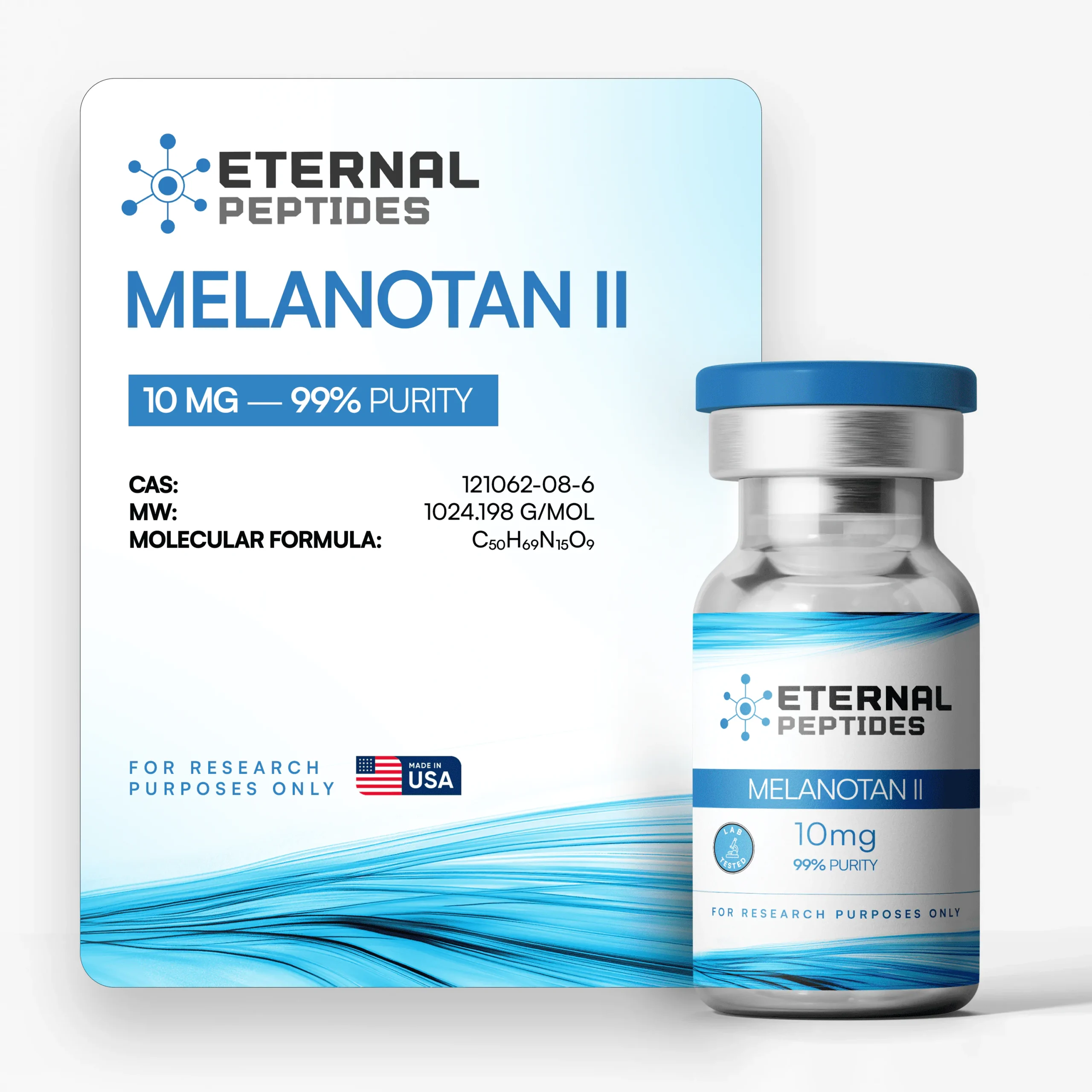
| Name | Melanotan II (MT-II) |
| Sequence | Ac-Nle-c[Asp-His-D-Phe-Arg-Trp-Lys]-NH₂ |
| Molecular Weight | 1024.2 g/mol |
| Molecular Formula | C₅₀H₆₉N₁₅O₉ |
| PubChem CID | 92432 |
| Structural Class | Cyclic heptapeptide melanocortin agonist |
| Product Form | Lyophilized powder in 10mg sterile vials |
| Purity | ≥99%, verified by third-party COA |
| Solubility | Soluble in bacteriostatic water or sterile aqueous buffers |
| Stability | Stable refrigerated or frozen in lyophilized form |
Handling & Storage Guidelines
Store unopened Melanotan II vials refrigerated at 36–46°F (2–8°C). For extended storage, freezing at 0°F (-18°C) or below is recommended. Protect from light and moisture.
If reconstitution is required:
- Use sterile laboratory-grade water or bacteriostatic water
- Add diluent slowly along vial wall
- Gently swirl until dissolved
- Avoid vigorous shaking
Aliquot reconstituted solutions into smaller sterile volumes when repeated use is expected.
Reconstituted solutions should be refrigerated and used according to laboratory protocols. Avoid repeated freeze-thaw cycles.
Use appropriate PPE and follow institutional laboratory handling standards.
COA / Quality Assurance
Every Melanotan II batch supplied by Eternal Peptides includes a lot-specific Certificate of Analysis (COA) supporting traceability and reproducibility.
COAs typically include:
- Identity confirmation via HPLC and/or mass spectrometry
- Purity analysis
- Sterility testing (where applicable)
- Endotoxin screening
- Storage guidance
- Lot traceability documentation
All testing is independently performed by trusted third-party laboratories such as Janoshik.
Legal Disclaimer
Melanotan II is sold strictly for laboratory research use only.
It is not approved for human or veterinary use, clinical administration, therapeutic treatment, or diagnostic purposes.
Safety and efficacy in humans or animals have not been established.
Purchasers are solely responsible for complying with all local, state, federal, and institutional regulations governing research compounds.
Scientific References
Tomassi S, et al. J Med Chem. 2022;65(5):4007–4017.
Cai M, Hruby VJ. Curr Protein Pept Sci. 2016;17(5):488–496.
Böhm M, et al. J Eur Acad Dermatol Venereol. 2025;39(1):39–51.
Ellacott KL, Cone RD. Philos Trans R Soc Lond B. 2006;361:1265–1274.
Wessells H, et al. Peptides. 2005;26(10):1972–1977.
Rössler AS, et al. Pharmacol Biochem Behav. 2006;85(3):514–521.
Banno R, et al. Peptides. 2004;25(8):1279–1286.