KPV
$34.99 – $59.99Price range: $34.99 through $59.99
Discount per Quantity
| Quantity | Discount | Price |
|---|---|---|
| 5 – 10 | 5% | $33.24 |
| 11 – 20 | 10% | $31.49 |
| 21+ | 15% | $29.74 |
Guaranteed
Ordering
Tested
Tracking
Commitment
Rigorous Third-Party Testing
Every batch of our research chemicals and peptides undergoes
third-party testing.
*Disclaimer: This product is intended solely for laboratory research purposes. It is not suitable for consumption by humans, nor for medical, veterinary, or household purposes. Kindly review our Terms & Conditions before making a purchase.

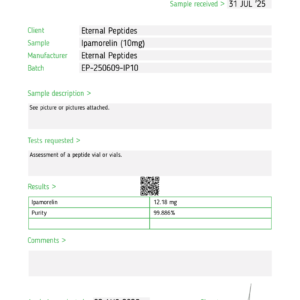
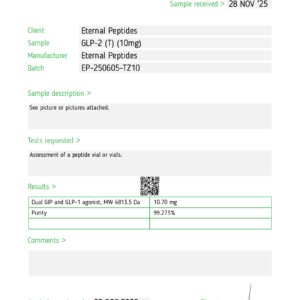
Always quality-tested, verified with third-party COAs
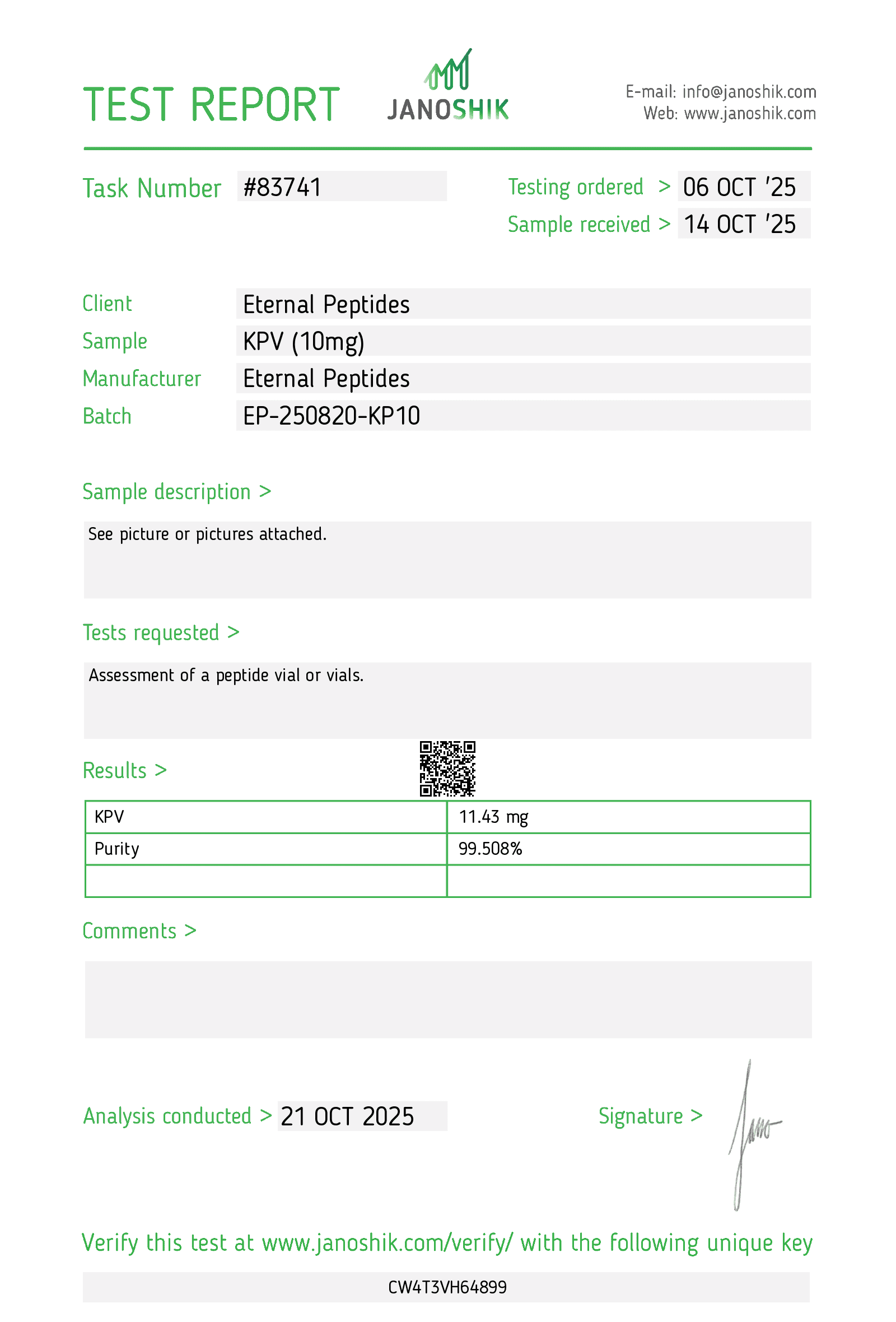
At every step, we prioritize quality by conducting rigorous third-party testing on all our products. These tests focus on five key characteristics- identity, purity, sterility, and endotoxin levels, and heavy metal content-ensuring that each product meets the highest standards of quality with independent third-party Certificates of Analysis (COAS) to verify our commitment to excellence.
Order KPV 10mg from Eternal Peptides, a trusted supplier of research peptides known for rigorous third-party testing and exceptional quality standards. Our high-purity KPV is independently verified by leading analytical laboratories, with Certificates of Analysis available for every batch. KPV is a tripeptide fragment widely studied for inflammatory response modulation, gut barrier integrity, epithelial repair, and immune signaling pathways. Shop KPV 10mg today at competitive pricing and enjoy fast USPS shipping—free on orders over $200—with dedicated 24/7 U.S.-based support. For research use only.
What is KPV?
KPV is a naturally occurring tripeptide composed of the amino acid sequence Lysine–Proline–Valine (Lys-Pro-Val). It represents the C-terminal fragment of alpha-melanocyte stimulating hormone (α-MSH), a peptide hormone involved in pigmentation, immune balance, and inflammatory regulation.
Researchers identified KPV as one of the key active fragments of α-MSH after discovering that this short sequence retained strong anti-inflammatory effects while lacking many of the hormonal actions associated with the full parent peptide. Because of this selective activity, KPV became an important research compound in studies focused on immune modulation and tissue protection.
Scientific literature has primarily explored KPV in areas such as:
- Inflammatory bowel disease models
- Gut barrier dysfunction
- Cytokine signaling regulation
- Wound healing and epithelial repair
- Allergic inflammation
- Antimicrobial activity
- Oxidative stress response
Most published findings come from cell culture systems and rodent models. Human clinical evidence remains limited, so KPV is best understood as a preclinical research peptide rather than an approved therapeutic compound.
Its small size, high solubility, and favorable stability profile make KPV especially attractive for laboratory investigation.
How KPV Works: Mechanistic Overview
KPV appears to work through several anti-inflammatory and barrier-protective pathways. Unlike full α-MSH, KPV may exert many of its effects without requiring classical melanocortin receptor activation.
Research suggests KPV may help regulate inflammation by:
- Inhibiting NF-κB signaling
- Reducing pro-inflammatory cytokine release
- Supporting epithelial tight junction integrity
- Stabilizing mast cell responses
- Lowering oxidative stress markers
- Limiting inflammatory tissue injury
These properties have made KPV a widely studied peptide in gastrointestinal and mucosal inflammation models.
NF-κB Pathway Inhibition
One of the most studied actions of KPV is suppression of NF-κB, a major transcription factor that drives inflammatory gene expression.
When NF-κB is overactivated, cells may produce excessive inflammatory mediators such as:
- TNF-α
- IL-1β
- IL-6
- IL-8
- COX-2
- iNOS
Laboratory studies suggest KPV reduces NF-κB nuclear signaling, helping calm inflammatory cascades and reduce tissue stress.
Cytokine Modulation
KPV has been shown in experimental models to lower multiple pro-inflammatory cytokines while preserving a more balanced immune response.
Observed effects include reductions in:
- TNF-α
- IL-6
- IL-1β
- IFN-γ
- Chemokines involved in immune-cell recruitment
Rather than acting as a broad immune suppressant, KPV is generally studied as a modulator that may restore balance under inflammatory conditions.
Gut Barrier and Epithelial Protection
KPV is especially known for gut barrier research.
Studies using intestinal epithelial cell models show KPV may help preserve tight junction proteins such as:
- Occludin
- Claudins
- ZO-1
These proteins help maintain the intestinal barrier and prevent unwanted permeability.
In animal colitis models, KPV has been associated with:
- Reduced intestinal permeability
- Less tissue ulceration
- Lower inflammatory infiltration
- Improved histological scores
- Better mucosal healing
This is why KPV is commonly researched in inflammatory bowel disease models.
Wound Healing and Tissue Repair
KPV has also been studied in dermal and mucosal wound models.
Reported experimental outcomes include:
- Faster re-epithelialization
- Improved collagen organization
- Reduced inflammatory persistence
- Better barrier restoration
- Enhanced healing quality
Because chronic inflammation often delays tissue repair, KPV’s dual anti-inflammatory and healing-supportive profile makes it valuable in regeneration studies.
Antimicrobial Research Interest
Some studies suggest KPV may also display antimicrobial activity against select pathogens, especially in models where inflammation and barrier damage occur together.
This area remains emerging, but researchers have investigated KPV for:
- Biofilm disruption
- Reduced bacterial burden in wound models
- Lower microbial translocation in gut injury models
Evidence Limitations
Although KPV has shown promising results across multiple preclinical models, controlled human clinical data is still very limited.
Important unknowns include:
- Human pharmacokinetics
- Oral/systemic bioavailability
- Optimal dosing ranges
- Long-term safety
- Clinical efficacy in inflammatory diseases
Current evidence supports KPV as a research compound, not an approved medicine.
KPV Research Value (Applications)
Researchers commonly investigate KPV in:
Inflammatory Bowel Disease Models
Used in DSS and TNBS colitis studies involving gut inflammation and mucosal damage.
Barrier Dysfunction Research
Studied in epithelial tight-junction integrity and permeability experiments.
Dermatology Models
Examined for dermatitis, irritation, redness, and inflammatory skin conditions.
Wound Healing Studies
Used in tissue repair, diabetic wound models, and re-epithelialization research.
Allergy / Mast Cell Research
Investigated for histamine release modulation and inflammatory mediator control.
KPV Peptide Characteristics
| Property | Details |
|---|---|
| Name | KPV |
| Full Sequence | Lys-Pro-Val |
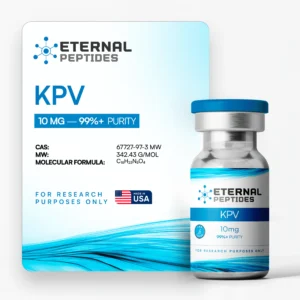
| Molecular Formula | C₁₆H₃₀N₄O₄ |
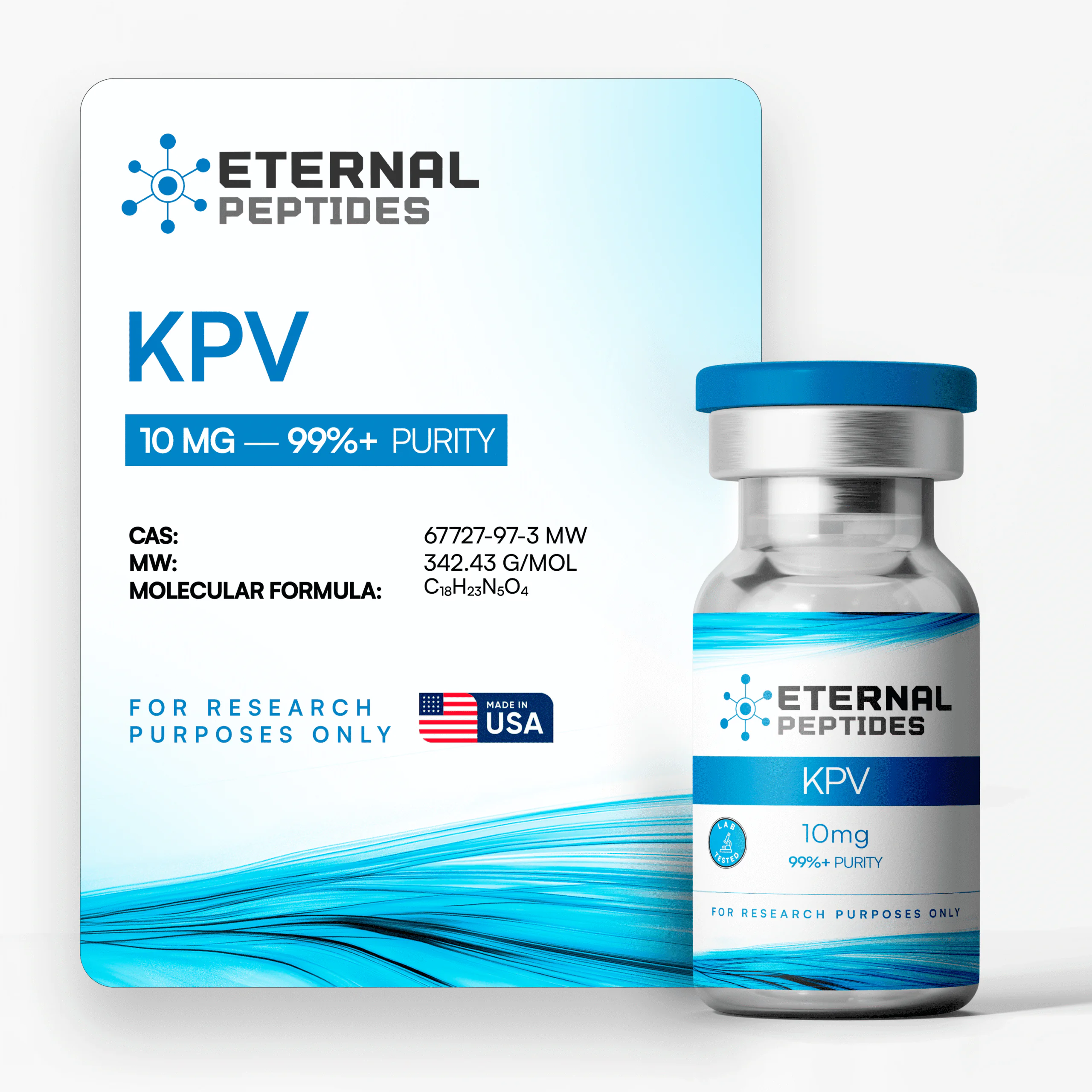
| Molecular Weight | 342.43 g/mol |
| PubChem CID | 125672 |
| Product Form | Lyophilized powder in 10mg vial |
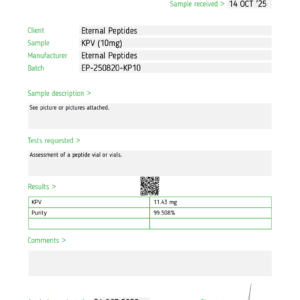
| Purity | ≥99% (third-party verified) |
| Solubility | Sterile water / bacteriostatic water / PBS |
| Stability | Strong under physiological pH conditions |
Handling & Storage Guidelines
For best research integrity:
- Store unopened lyophilized vials frozen at -20°C
- Protect from moisture, heat, and light
- Reconstitute with sterile water or PBS
- Swirl gently to dissolve
- Refrigerate reconstituted solution at 2–8°C
- Aliquot for long-term frozen storage
- Avoid repeated freeze-thaw cycles
- Use standard PPE and laboratory protocols
COA / Quality Assurance
Each KPV batch from Eternal Peptides includes lot-specific quality documentation.
Typical COA contents:
- Identity verification (HPLC / MS)
- Purity quantification
- Endotoxin screening
- Sterility review (where applicable)
- Storage recommendations
- Batch traceability
Independent testing may include leading labs such as Janoshik and Finnrick Analytics.
Legal / Regulatory Disclaimer
KPV is sold strictly for laboratory research use only. It is not approved by the FDA for human consumption, veterinary use, therapeutic treatment, or diagnostic procedures.
Purchasers are responsible for complying with all applicable laws, regulations, and institutional research policies.
Scientific References
- Land SC. Int J Physiol Pathophysiol Pharmacol. 2012.
- Dalmasso G et al. Gastroenterology. 2008.
- Marotti V et al. Bioact Mater. 2023.
- Luger TA, Brzoska T. Ann Rheum Dis. 2007.
- Adnan SB et al. Int J Med Sci. 2025.
- Mercer DK, O’Neil DA. Front Immunol. 2020.
- Zhang D et al. Front Pharmacol. 2024.
- Viennois E et al. Cell Mol Gastroenterol Hepatol. 2016.