
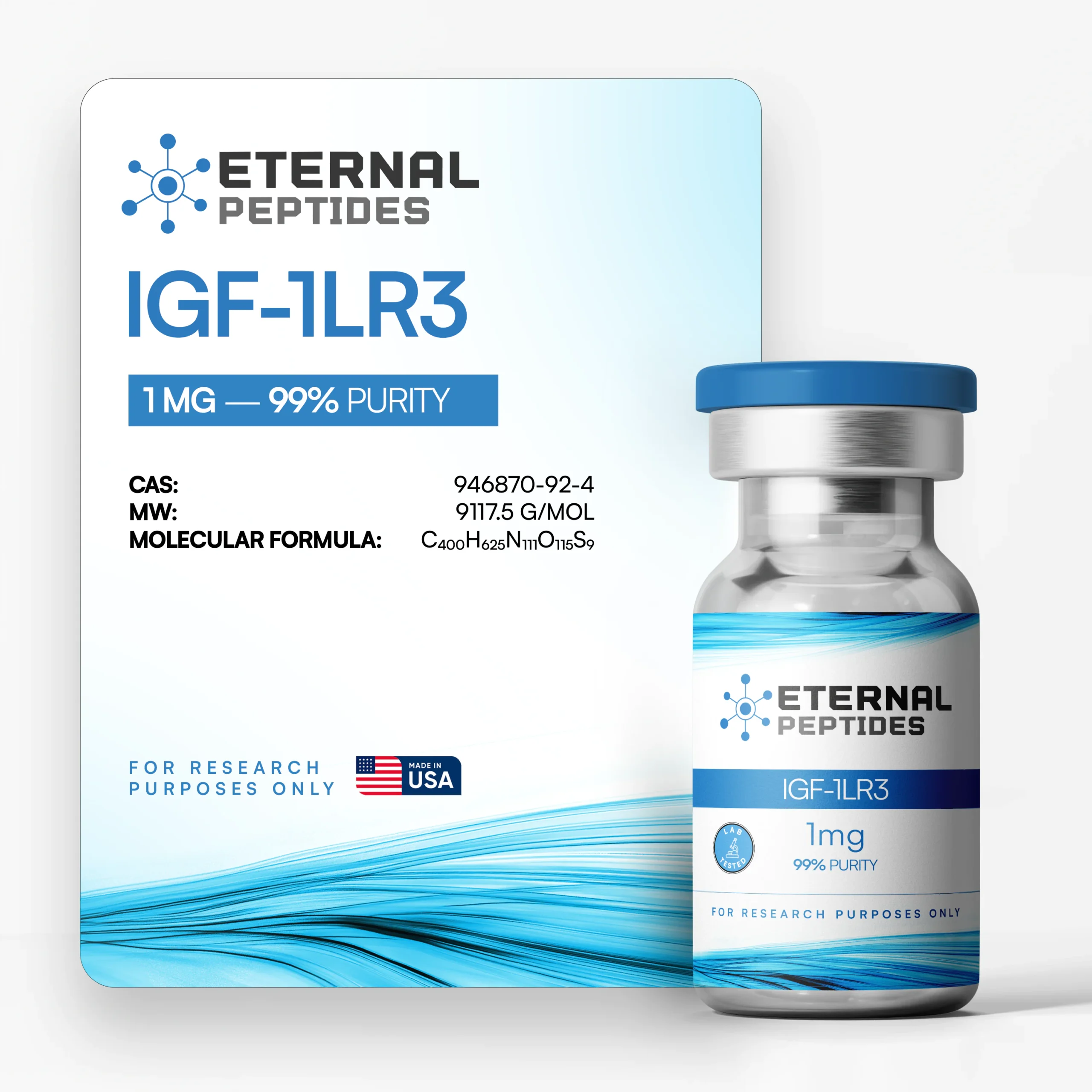
IGF-1 LR3 (1mg)
$130.00 Original price was: $130.00.$104.99Current price is: $104.99.
Discount per Quantity
| Quantity | Discount | Price |
|---|---|---|
| 5 – 10 | 5% | $99.74 |
| 11 – 20 | 10% | $94.49 |
| 21+ | 15% | $89.24 |
Guaranteed
Ordering
Tested
Tracking
Commitment
Rigorous Third-Party Testing
Every batch of our research chemicals and peptides undergoes
third-party testing.
*Disclaimer: This product is intended solely for laboratory research purposes. It is not suitable for consumption by humans, nor for medical, veterinary, or household purposes. Kindly review our Terms & Conditions before making a purchase.

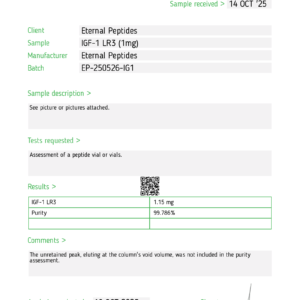
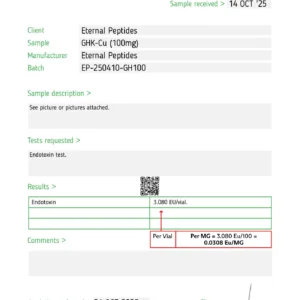
Always quality-tested, verified with third-party COAs
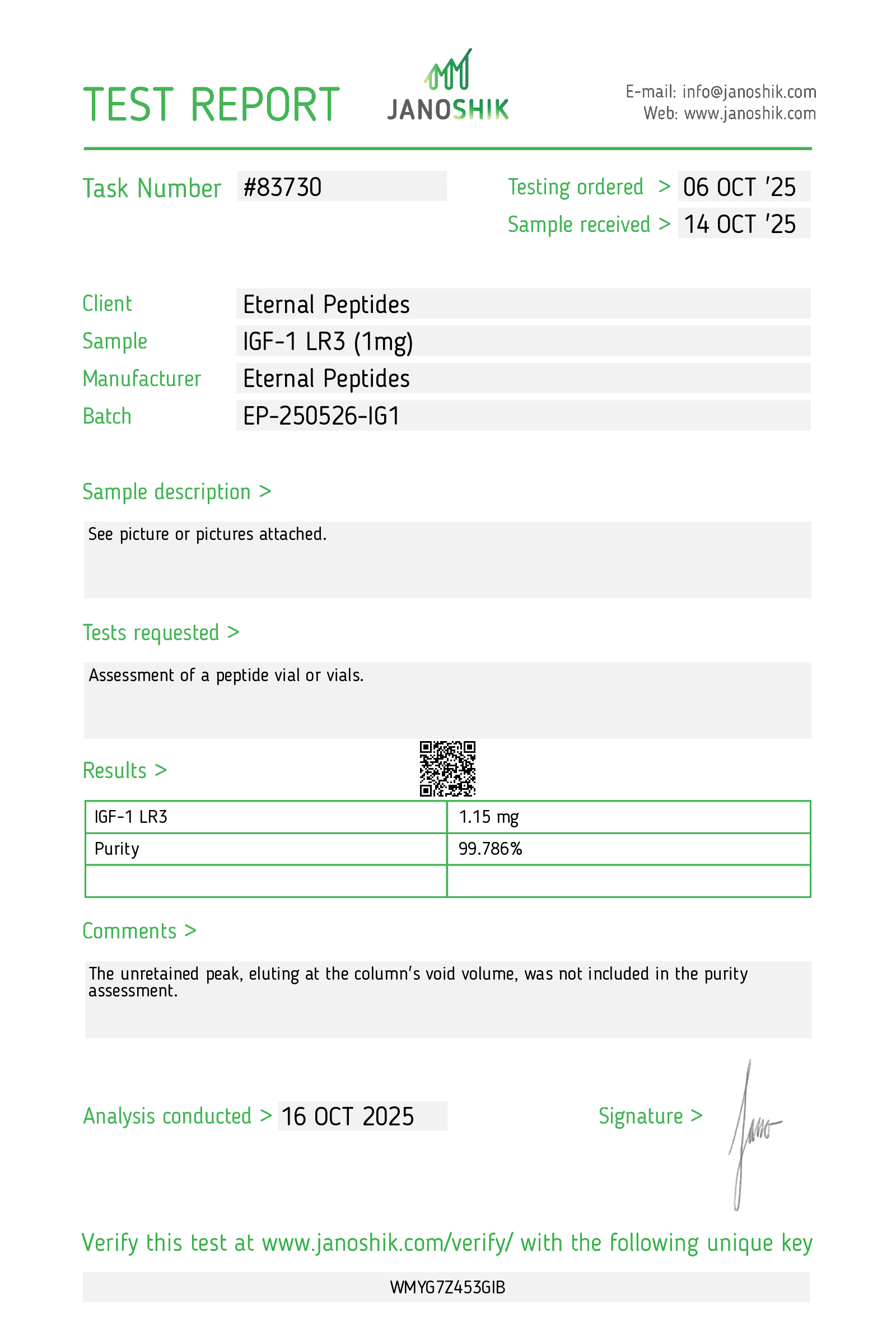
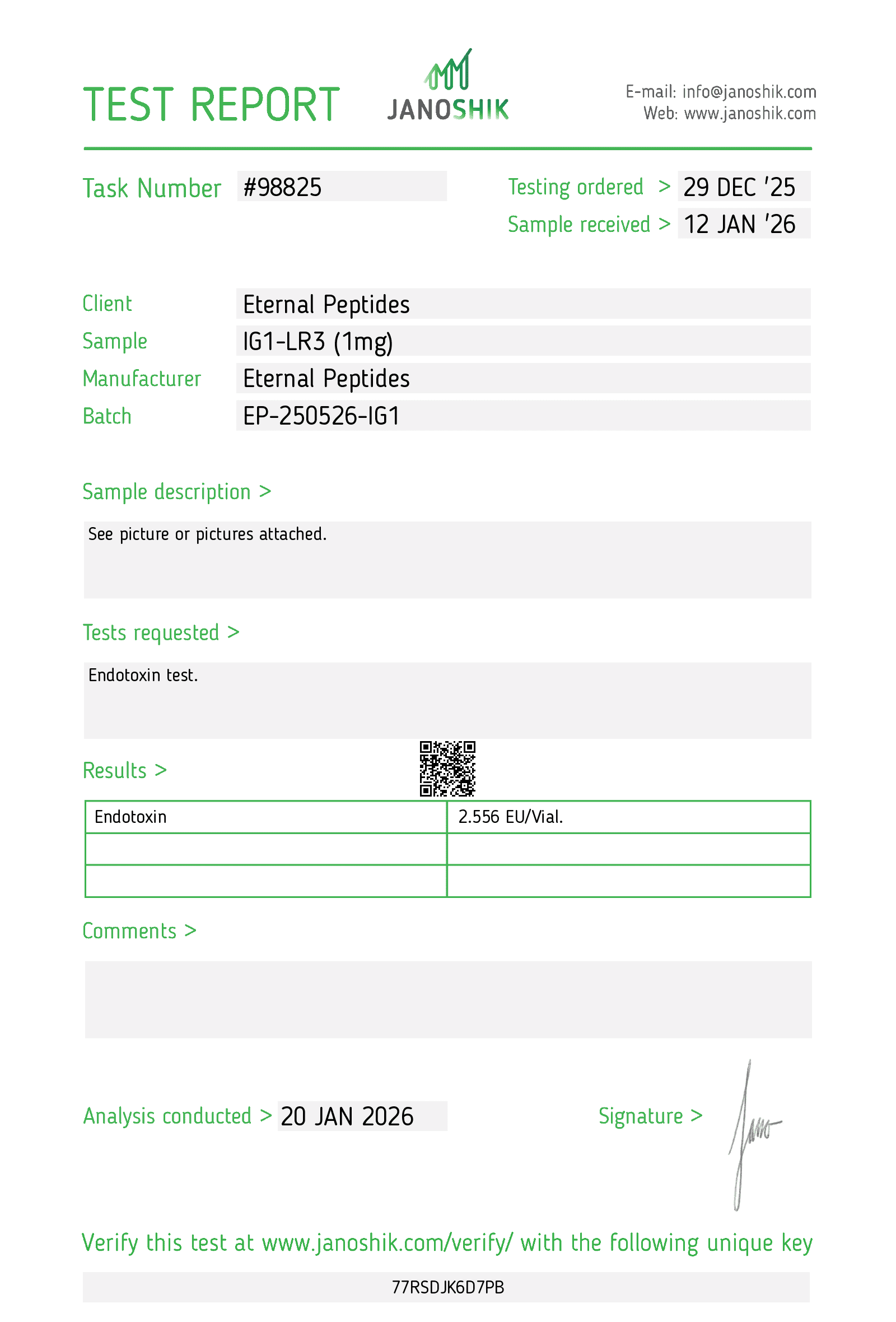
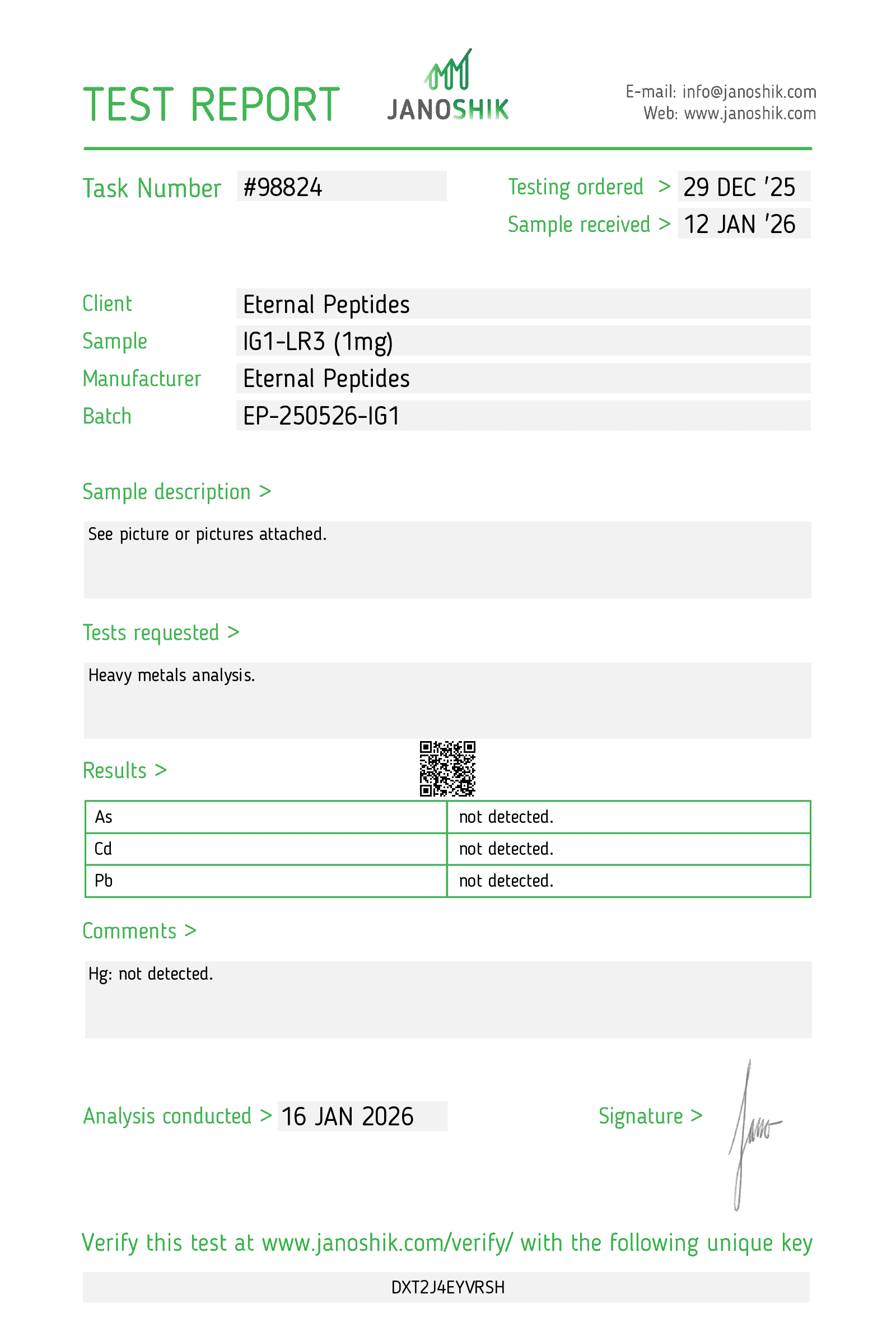
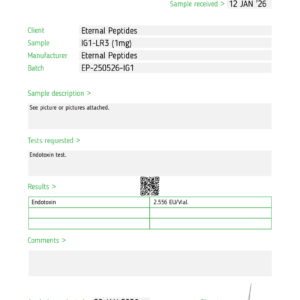
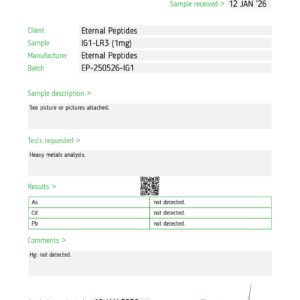
At every step, we prioritize quality by conducting rigorous third-party testing on all our products. These tests focus on five key characteristics- identity, purity, sterility, and endotoxin levels, and heavy metal content-ensuring that each product meets the highest standards of quality with independent third-party Certificates of Analysis (COAS) to verify our commitment to excellence.
Purchase IGF-1 LR3 1mg from Eternal Peptides, a reputable supplier of research compounds that provides every batch with independent third-party laboratory verification. IGF-1 LR3 is a long-acting recombinant analogue of insulin-like growth factor-1 that is widely studied in laboratory research involving cellular growth, differentiation, and metabolic signaling pathways. Each 1mg lyophilized vial is tested by external labs to confirm 99%+ purity and identity, and comes with a Certificate of Analysis (COA) for full transparency. Orders are competitively priced and include fast, secure USPS shipping, with free delivery on purchases over $200. This product is strictly intended for research use only.
What is IGF-1 LR3?
IGF-1 LR3 (Insulin-Like Growth Factor-1 Long R3) is a synthetic recombinant version of human IGF-1 that has been modified to change its binding behavior and extend its activity in experimental systems.
It contains 83 amino acids, compared to the 70 amino acids found in natural IGF-1. Two key structural changes define this analogue:
- A substitution at position 3 where glutamic acid is replaced with arginine
- An added 13-amino acid extension (MFPAMPLLSLFVN) at the N-terminus
These modifications were designed to reduce interaction with IGF-binding proteins (IGFBPs), which normally bind IGF-1 in circulation and limit how much is freely available. The change at position 3 is particularly important because it disrupts a major IGFBP interaction site.
Because of this reduced binding, IGF-1 LR3 remains more available in experimental environments, making it useful for controlled research studies.
In cell-based experiments, IGF-1 LR3 has been shown to appear 2–3 times more potent than native IGF-1 in receptor activation assays. However, this is largely due to reduced protein binding rather than stronger receptor affinity. In direct receptor binding tests, it may actually show slightly lower affinity for the IGF-1 receptor compared to natural IGF-1.
The compound was developed in the early 1990s through work involving GroPep Ltd. and academic collaborators as a research tool to better study IGF-1 receptor signaling with more stable exposure profiles. In animal models, it shows a longer functional half-life (around 20–30 hours), though this varies depending on species and experimental conditions.
Human pharmacokinetic data for this specific analogue is not well established in peer-reviewed research, so all observed properties should be considered strictly within preclinical contexts.
How IGF-1 LR3 Works: Mechanistic Overview
IGF-1 LR3 functions primarily by binding to the IGF-1 receptor (IGF-1R) and activating downstream signaling pathways responsible for growth and metabolic regulation. A key feature of this analogue is its reduced binding to IGF-binding proteins, which increases its free availability in experimental systems and extends its functional activity compared to native IGF-1.
Research typically uses IGF-1 LR3 to study processes such as cell growth, protein synthesis, differentiation, and survival signaling, especially in muscle, metabolic, and cell culture systems.
IGF-1 Receptor Activation and Signaling Pathways
When IGF-1 LR3 binds to IGF-1R, the receptor becomes activated through phosphorylation, creating docking sites for signaling proteins such as IRS-1 and Shc. These initiate two major intracellular pathways:
- PI3K–Akt–mTOR pathway, which is mainly associated with protein synthesis, cell survival, and growth regulation
- MAPK/ERK pathway, which is more involved in cell proliferation and progression through the cell cycle
These pathways interact and influence each other depending on the cell type and experimental conditions. Researchers often measure their activity using phosphorylation markers, gene expression changes, and cell growth assays.
IGF-1 LR3 also has slight activity at the insulin receptor due to structural similarity within the IGF/insulin family, although its primary action remains IGF-1R-centered.
Reduced IGFBP Binding and Extended Activity
Under normal conditions, most IGF-1 in biological systems is bound to IGF-binding proteins (IGFBPs), especially IGFBP-3 and IGFBP-5, which limit its availability.
The structural modification in IGF-1 LR3 reduces this binding, allowing a larger fraction of the molecule to remain free and active in experimental settings. This is particularly useful in cell culture environments where IGFBPs can otherwise significantly reduce IGF activity.
Because of this property, IGF-1 LR3 is often used in serum-free or low-serum systems to improve cell viability, growth, and protein production. It also contributes to the extended functional duration observed in animal models compared to native IGF-1.
Evidence Limitations
Most knowledge about IGF-1 LR3 comes from cell culture and animal studies, where conditions are tightly controlled. These findings should not be assumed to directly apply to human biology, as differences in binding proteins, receptor expression, and hormonal regulation can significantly alter responses.
There is no well-established clinical evidence for IGF-1 LR3 in humans, so all mechanistic interpretations remain strictly within preclinical research frameworks.
Research Applications of IGF-1 LR3
IGF-1 LR3 has been studied in several experimental areas including muscle biology, tissue repair models, metabolic signaling, and cell culture optimization. These findings are based on laboratory and animal studies and do not imply therapeutic use in humans or animals.
It is supplied strictly for research purposes only.
Muscle Growth and Protein Synthesis Studies
In experimental muscle models, IGF-1 LR3 is used to investigate pathways involved in muscle cell growth and protein synthesis. Activation of IGF-1R triggers downstream mTOR signaling, which is associated with increased protein production and muscle cell differentiation.
Researchers use it to better understand how growth factor signaling influences muscle development in controlled environments.
Tissue Repair and Regeneration Research
IGF-1 signaling plays an important role in cell survival and tissue repair. IGF-1 LR3 has been used in experimental models of injury to study how enhanced receptor activation affects cell regeneration and survival responses.
In simpler terms, it helps scientists observe how growth signals influence repair mechanisms in damaged tissues in animal and cell models.
Metabolic and Glucose Regulation Studies
In animal studies, IGF pathway activation has been linked to changes in glucose uptake and insulin-related signaling. IGF-1 LR3 is used to explore how sustained IGF-1 receptor activation affects metabolic processes such as glucose transport and cellular energy use.
Cell Culture and Bioprocessing Applications
Due to its reduced binding to IGFBPs and extended activity, IGF-1 LR3 is commonly used in cell culture systems. It helps support cell growth, survival, and productivity in serum-free or low-serum environments, especially in biomanufacturing research.
IGF-1 LR3 Characteristics
| Property | Description |
|---|---|
| Name | IGF-1 LR3 (Insulin-Like Growth Factor-1 Long R3) |
| Structure | 83-amino acid IGF-1 analogue with N-terminal extension and Arg substitution |
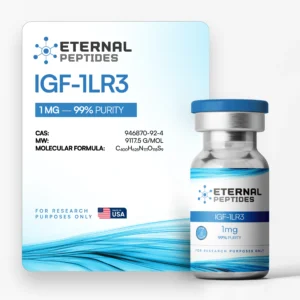
| Molecular Weight | ~9,117.5 g/mol |
| Formula | C400H625N111O116S9 |
| Form | Lyophilized powder (1 mg vials) |
| Purity | ≥99% (third-party verified) |
| Solubility | Sterile water or mild acidic solution |
| Stability | Stable when frozen or refrigerated; sensitive after reconstitution |
Handling & Storage
To maintain stability and experimental reliability:
- Store lyophilized vials at 2–8°C, or freeze for long-term storage
- Protect from light, heat, and moisture
- Reconstitute using sterile laboratory-grade water
- Mix gently without shaking
- Use aliquots to avoid repeated freeze-thaw cycles
- Keep reconstituted solutions refrigerated for short-term use
- Follow proper lab safety procedures
COA / Quality Assurance
Each batch includes a Certificate of Analysis (COA) verifying:
- Molecular identity (HPLC and/or mass spectrometry)
- Purity levels (typically ≥99%)
- Sterility and endotoxin testing where applicable
- Storage and handling recommendations
All testing is performed through independent third-party laboratories such as Janoshik to ensure objective quality validation.
Legal Disclaimer
IGF-1 LR3 is intended strictly for laboratory research use only. It is not approved for human consumption, medical treatment, veterinary use, or diagnostic applications. Researchers are responsible for ensuring compliance with all applicable regulations and institutional guidelines.
Related Products
Related products
,