
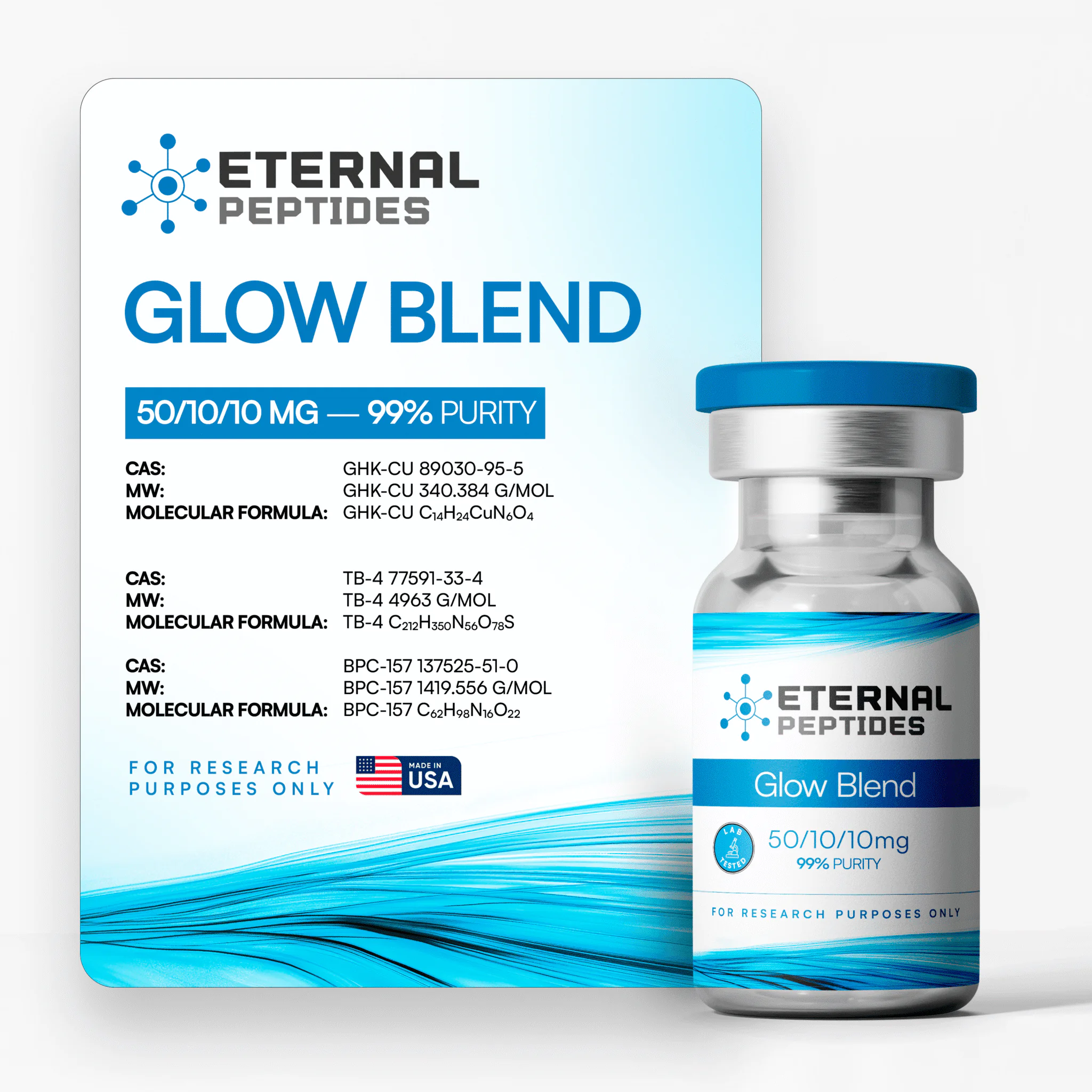
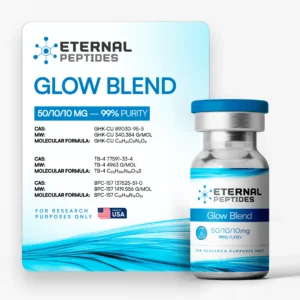
Glow Blend (70mg)
$160.00 Original price was: $160.00.$150.99Current price is: $150.99.
Discount per Quantity
| Quantity | Discount | Price |
|---|---|---|
| 5 – 10 | 5% | $143.44 |
| 11 – 20 | 10% | $135.89 |
| 21+ | 15% | $128.34 |
Guaranteed
Ordering
Tested
Tracking
Commitment
Rigorous Third-Party Testing
Every batch of our research chemicals and peptides undergoes
third-party testing.
*Disclaimer: This product is intended solely for laboratory research purposes. It is not suitable for consumption by humans, nor for medical, veterinary, or household purposes. Kindly review our Terms & Conditions before making a purchase.

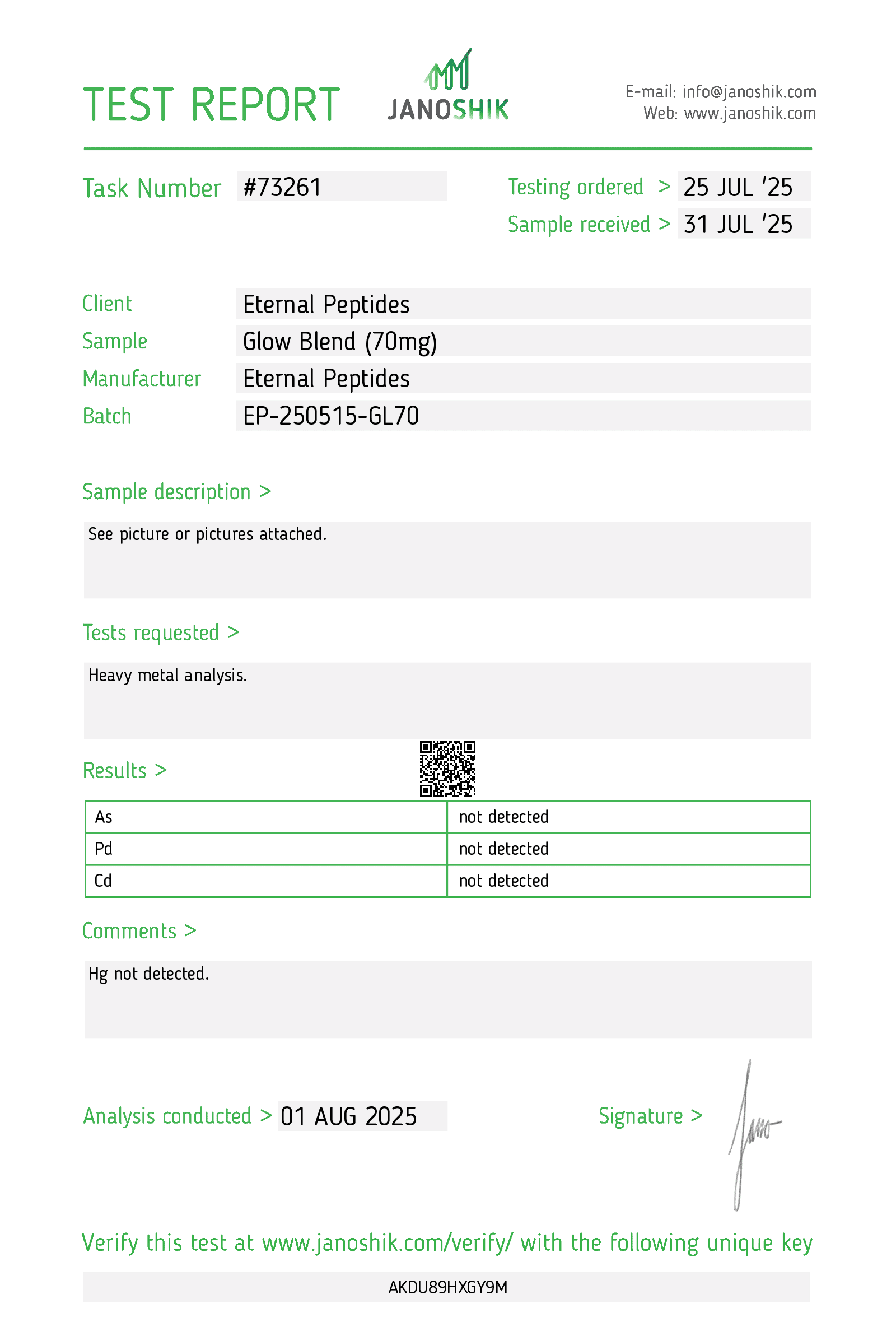
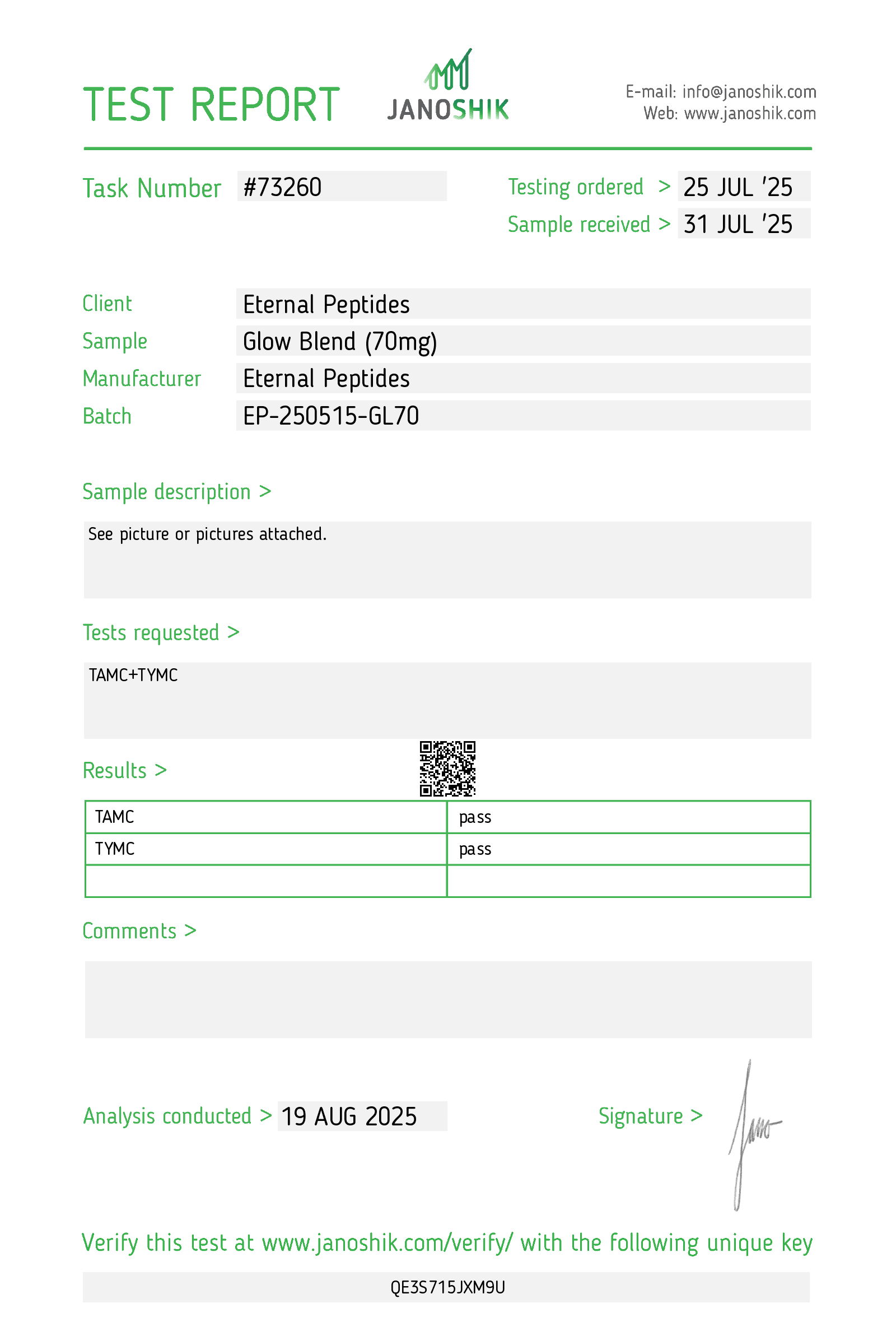
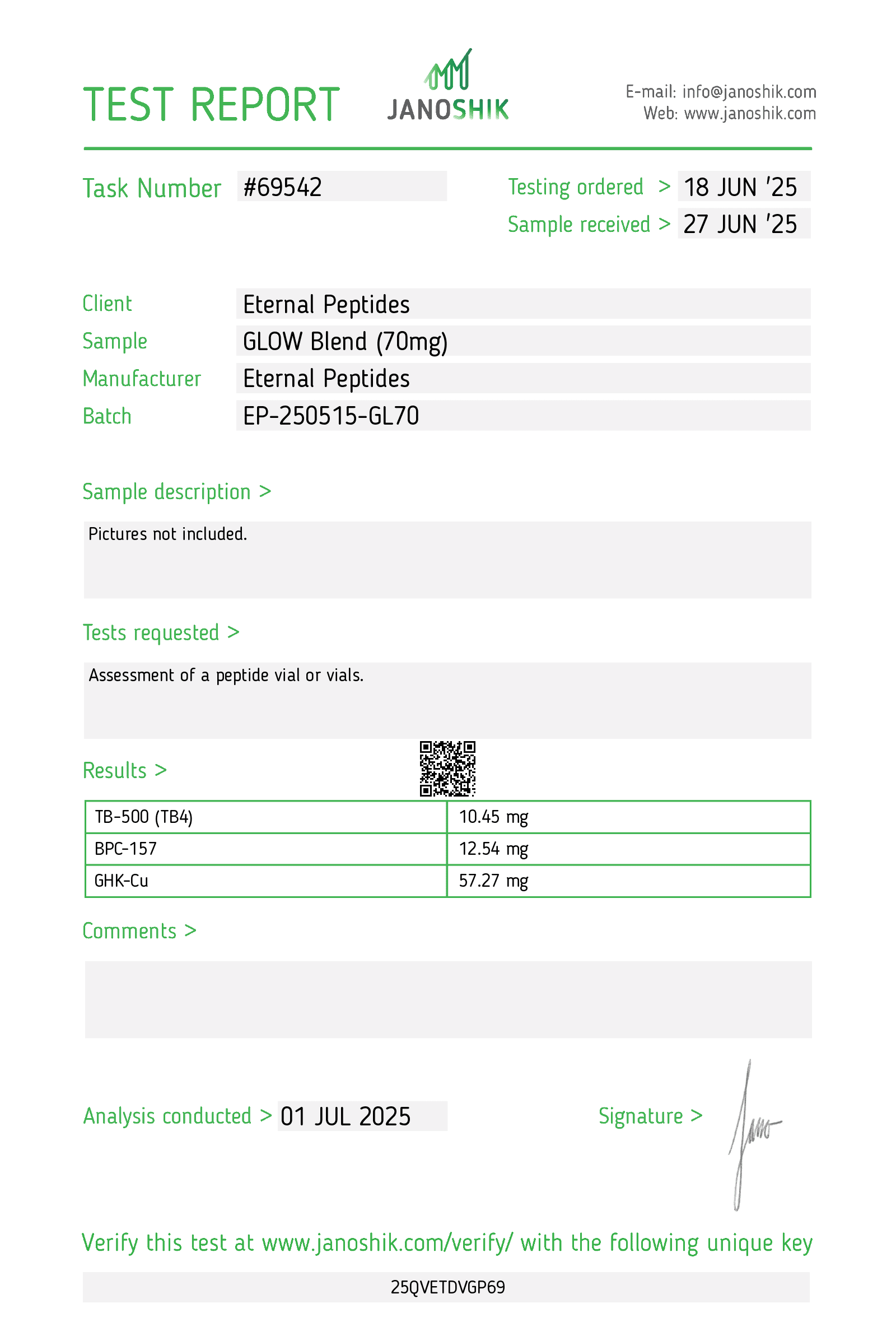
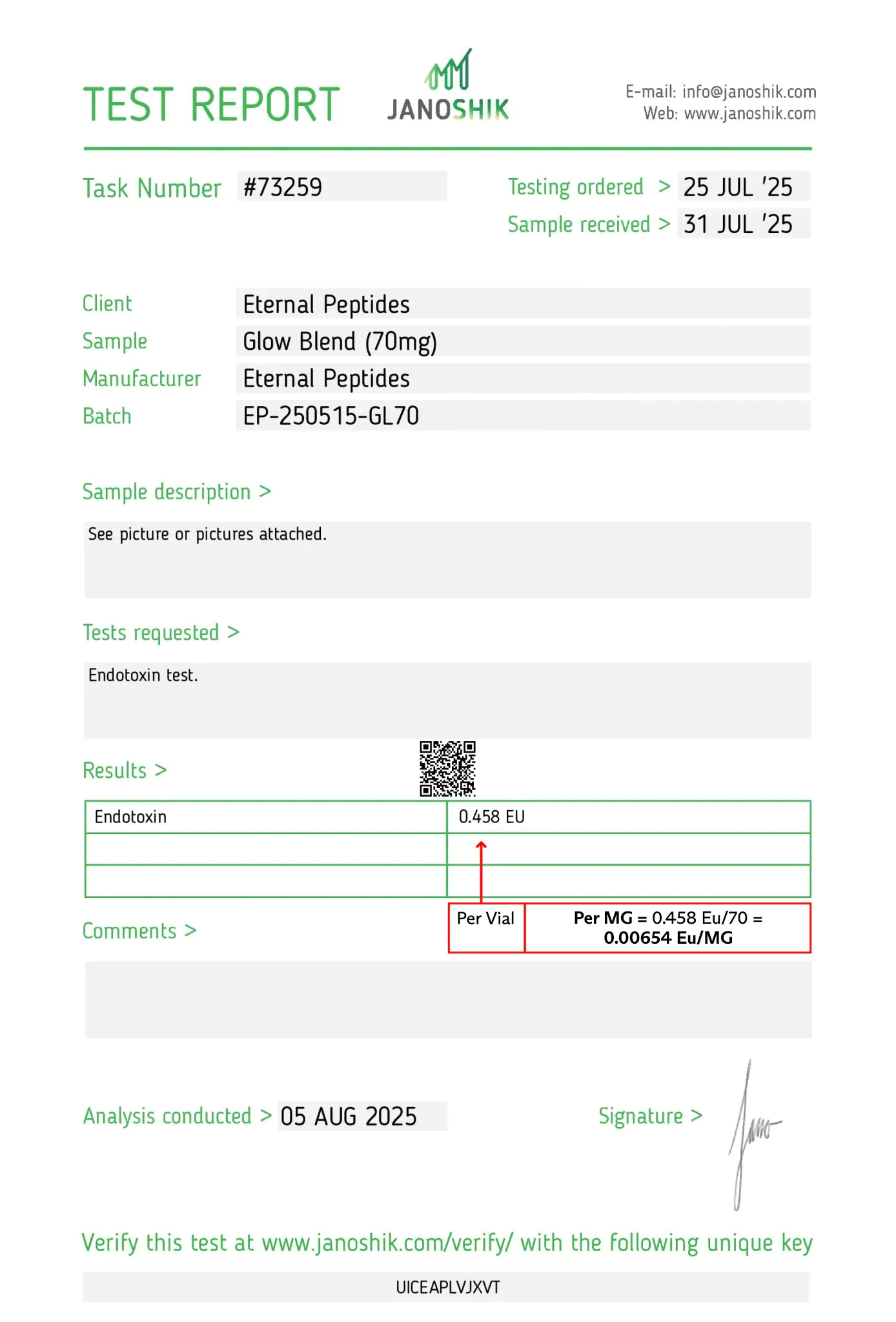
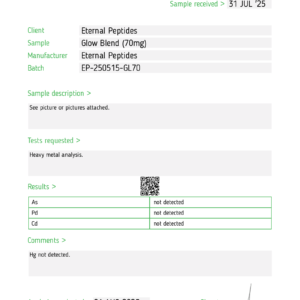
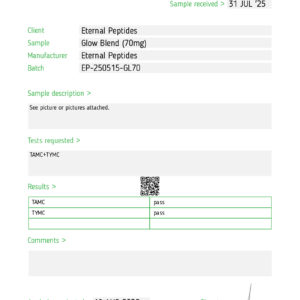
Always quality-tested, verified with third-party COAs
At every step, we prioritize quality by conducting rigorous third-party testing on all our products. These tests focus on five key characteristics- identity, purity, sterility, and endotoxin levels, and heavy metal content-ensuring that each product meets the highest standards of quality with independent third-party Certificates of Analysis (COAS) to verify our commitment to excellence.
Here’s a rewritten version in the same style and structure, but with fresh wording and smoother flow:
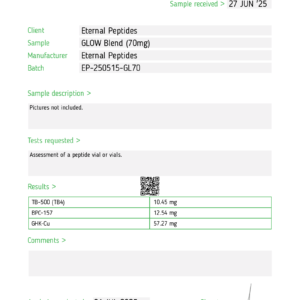
Shop high-purity Glow Blend 70mg from Eternal Peptides, a reliable U.S. supplier of research-grade compounds with strict third-party quality verification. This premium formulation combines three well-studied research peptides—GHK-Cu, BPC-157, and TB-500—synthesized to ≥99% purity and independently tested by certified analytical laboratories such as Janoshik.
Glow Blend is designed for laboratory studies focused on tissue remodeling, extracellular matrix behavior, and cellular regeneration pathways. Every batch includes full Certificates of Analysis (COAs) for transparency and reproducibility. Order today for fast, discreet U.S. shipping and free priority delivery on orders over $200. For research use only.
What is Glow Blend?
Glow Blend is a multi-peptide research formulation made from three distinct compounds:
- GHK-Cu (glycyl-L-histidyl-L-lysine copper complex) – a naturally occurring copper-binding tripeptide first identified in human plasma, widely studied for its role in cellular signaling and matrix remodeling
- BPC-157 (Body Protection Compound-157) – a synthetic 15-amino-acid peptide derived from a protective gastric protein sequence
- TB-500 – a synthetic analogue inspired by thymosin beta-4, focused on actin-related cellular processes and migration pathways
In research literature, this combination is often explored in relation to tissue repair mechanisms, collagen dynamics, vascular signaling, and cellular regeneration models. Each peptide has been studied individually in preclinical settings, primarily in vitro and animal models.
Glow Blend is provided as a lyophilized powder to support stability, ease of storage, and accurate reconstitution in controlled laboratory environments.
How Glow Blend Works (Mechanistic Overview)
Glow Blend is studied as a multi-pathway system, where each peptide contributes different biological mechanisms:
- GHK-Cu influences copper-dependent enzymatic activity and gene expression linked to collagen production and extracellular matrix remodeling
- BPC-157 is studied for its interaction with signaling pathways involved in vascular response and cellular protection
- TB-500 is associated with actin regulation, supporting cell movement and tissue regeneration processes in experimental models
Together, these peptides are investigated for overlapping roles in inflammation modulation, angiogenesis, and structural tissue recovery. Most findings come from preclinical research, including cell cultures and animal studies.
Collagen and Extracellular Matrix Research
GHK-Cu is widely studied for its effects on fibroblast activity and extracellular matrix production. Research suggests it may influence the expression of structural proteins such as collagen types I and III, as well as elastin and related compounds.
It is also linked to enzymes involved in collagen cross-linking, such as lysyl oxidase, which plays a role in tissue structure formation. Some studies report changes in gene expression related to tissue remodeling and reduced activity of matrix-degrading enzymes.
Angiogenesis and Vascular Pathways
BPC-157 and TB-500 are both studied in relation to angiogenesis—the formation of new blood vessels in experimental models.
- TB-500 is associated with endothelial cell migration and VEGF-related signaling
- BPC-157 has been studied in relation to nitric oxide pathways and vascular response mechanisms
Animal studies suggest increased vascular density in tissue injury models, which is a key area of interest in regenerative biology research.
Cytoprotection and Inflammatory Signaling
BPC-157 has been observed in preclinical models to influence inflammatory mediators such as TNF-α and IL-6. These studies explore how tissues respond to injury and oxidative stress.
GHK-Cu has also been linked to modulation of inflammatory signaling pathways, including NF-κB-related activity, in laboratory models.
These effects are studied for their role in maintaining cellular stability during stress conditions, not for therapeutic use.
Cellular Migration and Tissue Remodeling
TB-500 is primarily researched for its role in actin dynamics. By interacting with actin regulation, it may influence how cells move and reorganize during experimental wound-healing models.
Cell culture studies (such as scratch assays) show faster cell migration and gap closure in TB-500-treated conditions, while animal models often report changes in epithelialization and tissue repair timelines.
Research Value of Glow Blend
Glow Blend is used in laboratory research to study:
- Tissue remodeling and structural repair processes
- Collagen production and extracellular matrix organization
- Cellular migration and cytoskeletal dynamics
- Angiogenesis and vascular development pathways
- Inflammatory signaling and oxidative stress response
- Regenerative biology and wound-healing models in animals
All observations are based on preclinical research only and should not be interpreted as human clinical outcomes.
Peptide Characteristics
Name: Glow Blend (GHK-Cu + BPC-157 + TB-500)
Form: Lyophilized research powder (70mg total blend)
Purity: ≥99% (each component, verified by third-party COA testing)
Solubility: Soluble in sterile water or laboratory buffers
Storage: Store frozen and protected from light and moisture
Each batch includes traceable COAs confirming identity, purity, and quality standards.
Handling & Storage
Store vials at -20°C or below in a dry, light-protected environment. After reconstitution, gently dissolve using sterile or bacteriostatic water without shaking.
Reconstituted solutions should be aliquoted to avoid repeated freeze–thaw cycles and stored refrigerated for short-term use or frozen for longer stability.
Standard laboratory safety procedures and institutional guidelines should always be followed during handling.
COA / Quality Assurance
Each Glow Blend batch is independently tested by third-party laboratories such as Janoshik. COAs typically include:
- HPLC and mass spectrometry confirmation
- Purity analysis (≥99%)
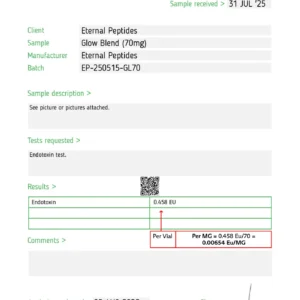
- Sterility and endotoxin testing (where applicable)
- Batch-specific traceability data
- Storage and handling recommendations
This ensures consistency, transparency, and reproducibility in research applications.
Legal Disclaimer
Glow Blend is intended strictly for laboratory research use only. It is not approved for human or veterinary use, diagnosis, treatment, or medical application of any kind.
Researchers are responsible for complying with all applicable laws, institutional policies, and safety regulations. Misuse or misrepresentation of this product may result in legal or regulatory consequences.
Scientific References
(References remain as provided in the original document for traceability and academic use.)
Related Products
Related products
,
,