
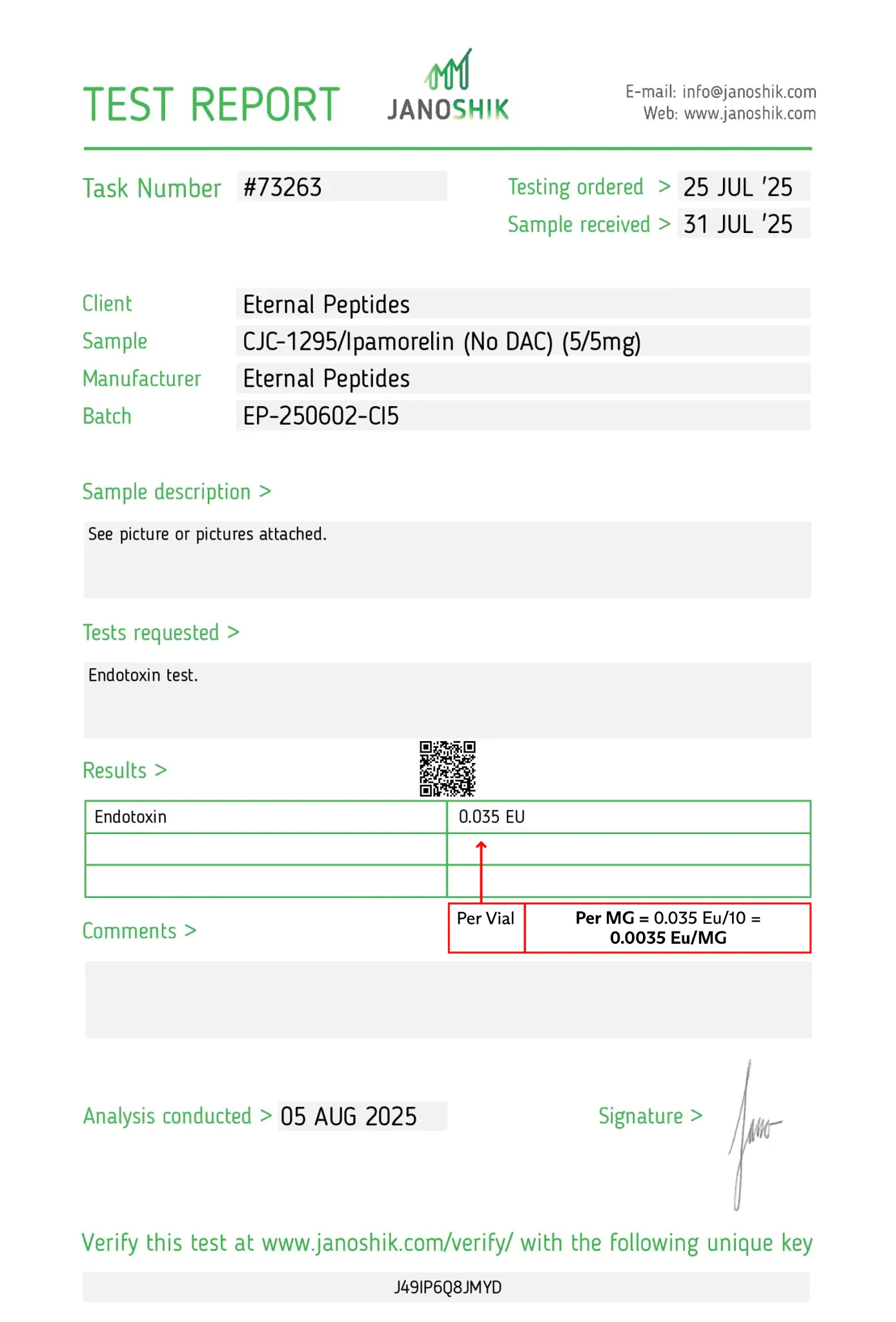
CJC 1295 + Ipamorelin (No DAC) (5mg/5mg)
$90.00 Original price was: $90.00.$84.99Current price is: $84.99.
Discount per Quantity
| Quantity | Discount | Price |
|---|---|---|
| 5 – 10 | 5% | $80.74 |
| 11 – 20 | 10% | $76.49 |
| 21+ | 15% | $72.24 |
Guaranteed
Ordering
Tested
Tracking
Commitment
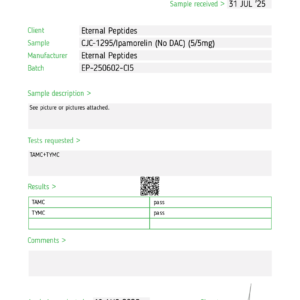
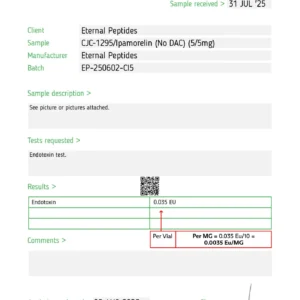
Rigorous Third-Party Testing
Every batch of our research chemicals and peptides undergoes
third-party testing.
*Disclaimer: This product is intended solely for laboratory research purposes. It is not suitable for consumption by humans, nor for medical, veterinary, or household purposes. Kindly review our Terms & Conditions before making a purchase.

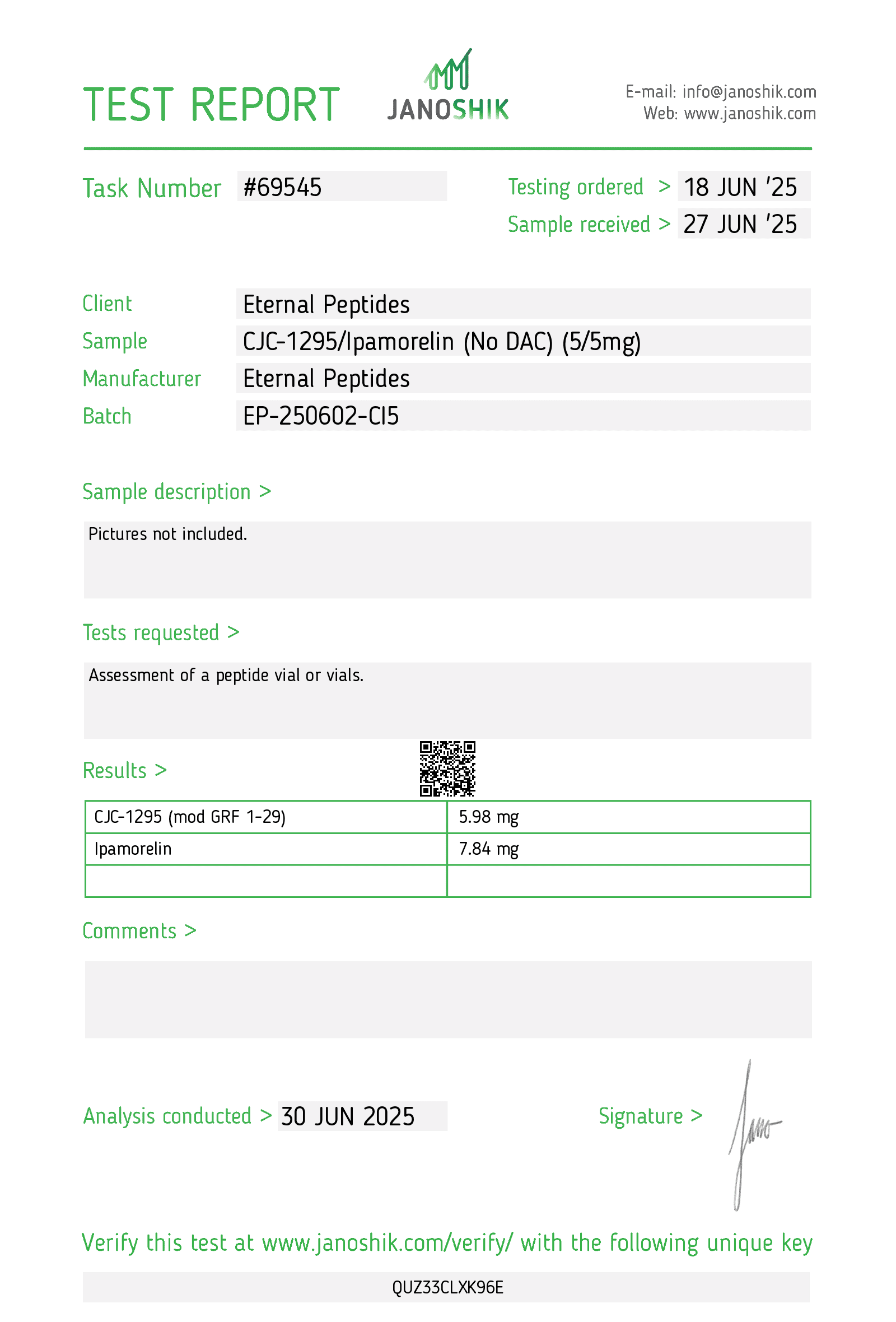
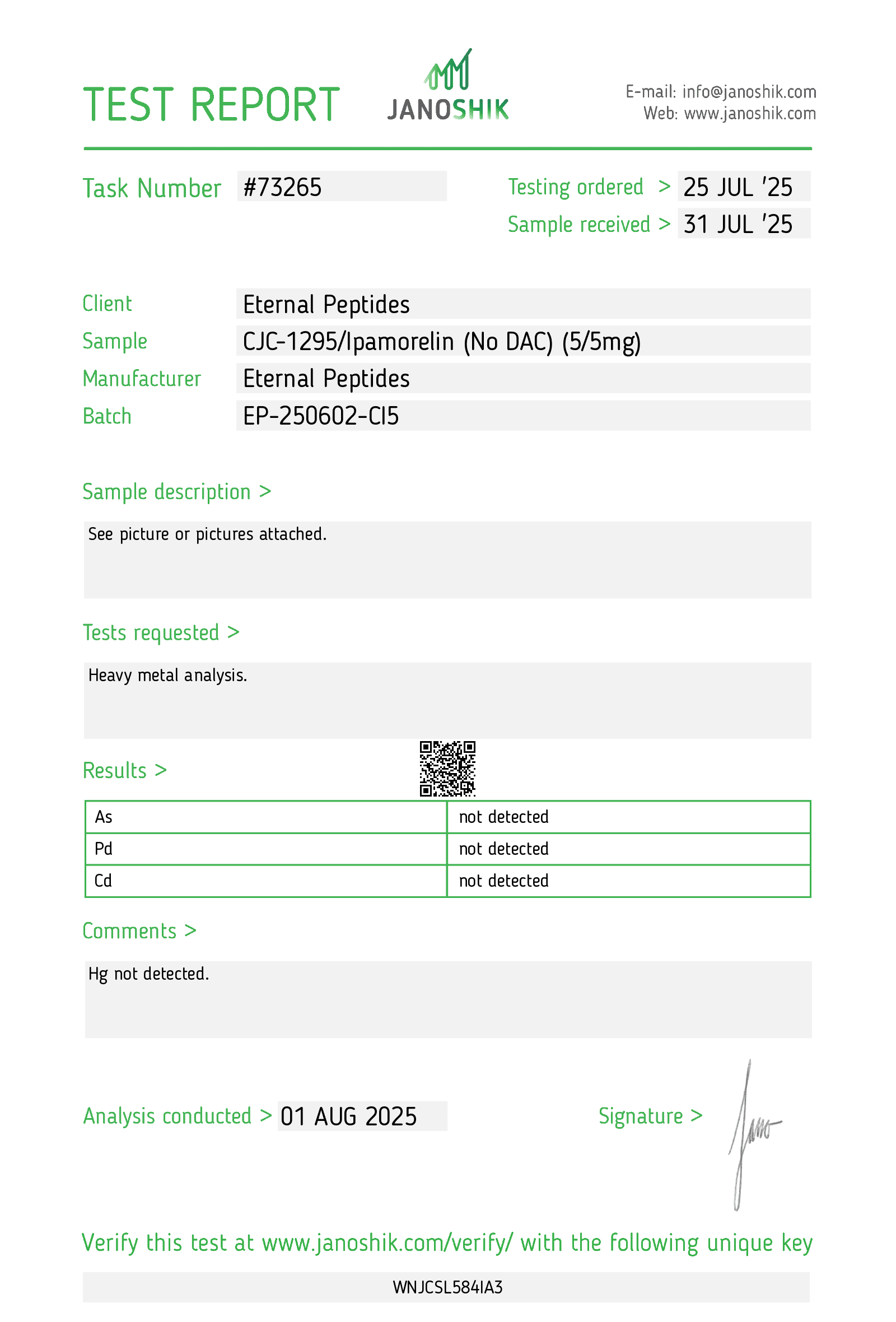
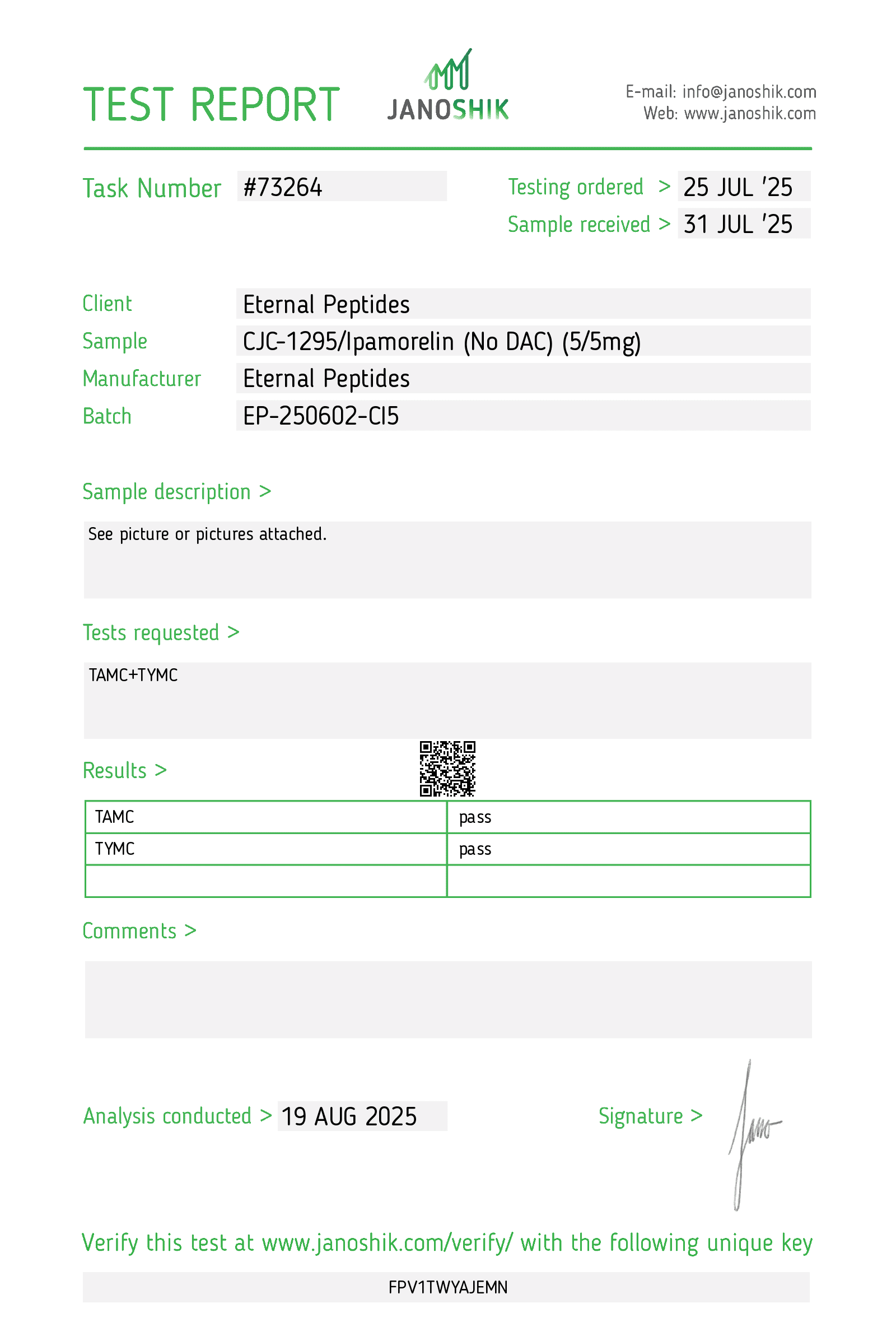
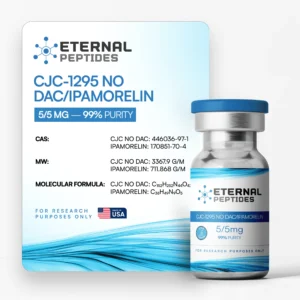
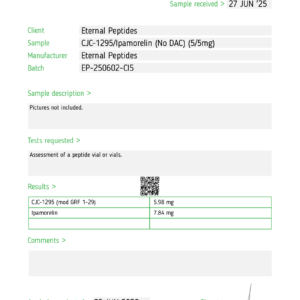
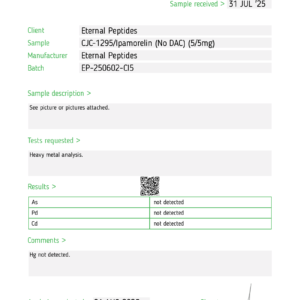
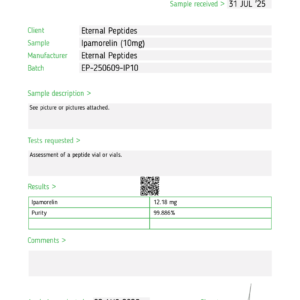
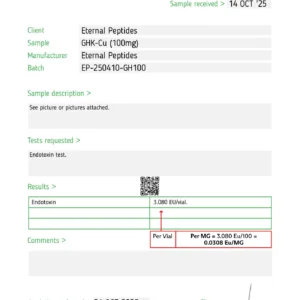
Always quality-tested, verified with third-party COAs
At every step, we prioritize quality by conducting rigorous third-party testing on all our products. These tests focus on five key characteristics- identity, purity, sterility, and endotoxin levels, and heavy metal content-ensuring that each product meets the highest standards of quality with independent third-party Certificates of Analysis (COAS) to verify our commitment to excellence.
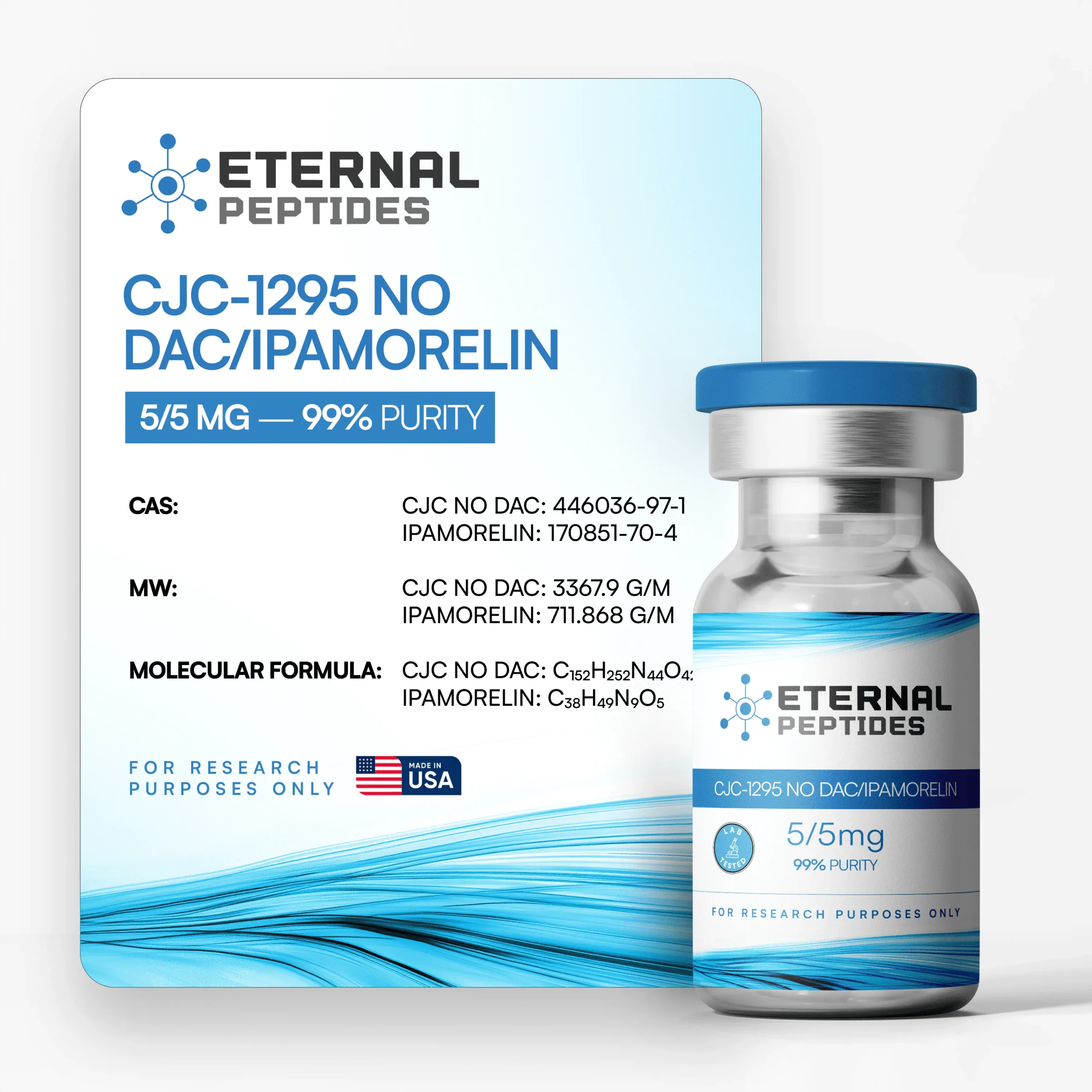
Shop premium-grade CJC-1295 + Ipamorelin 5mg/5mg (No DAC) from Eternal Peptides, a recognized leader in verified research compounds. This synergistic peptide blend is manufactured to a purity standard of ≥99%, with every batch independently tested and supported by third-party COAs from Janoshik. Our CJC-1295 and Ipamorelin combination is intended for researchers investigating natural growth hormone pulsatility and endocrine signaling pathways. Order today for fast, secure U.S. shipping and free Priority delivery on all purchases over $200.
What Is the CJC-1295 + Ipamorelin (No DAC) Blend?
CJC-1295 + Ipamorelin (No DAC) is a synthetic peptide combination consisting of CJC-1295 and Ipamorelin, a selective growth hormone–releasing peptide.
The term “No DAC” means the CJC-1295 molecule does not contain the Drug Affinity Complex (DAC), which is typically used to extend half-life. Without DAC, this version is shorter acting and therefore useful in research models focused on natural, pulsatile growth hormone release rather than prolonged exposure.
CJC-1295 (No DAC) is a modified analogue of growth hormone–releasing hormone (GHRH), generally composed of 29 amino acids, while Ipamorelin is a synthetic pentapeptide classified as a ghrelin mimetic. Both peptides were developed to study regulated growth hormone signaling rather than serve as endogenous hormone fragments.
In scientific literature, this peptide pairing is primarily researched for its potential role in growth hormone pulsatility, endocrine communication, and downstream metabolic or tissue-related processes.
Most available findings come from in vitro studies and animal models examining hormonal regulation, receptor selectivity, and signaling dynamics.
Mechanistically, CJC-1295 (No DAC) interacts with the GHRH receptor, while Ipamorelin selectively activates the ghrelin receptor (GHS-R1a). Together, they may support coordinated stimulation of natural growth hormone release pathways. Controlled human evidence remains limited, so current conclusions remain within a preclinical research context.
How CJC-1295 (No DAC) + Ipamorelin Blend Works
The CJC-1295 + Ipamorelin blend (No DAC) is studied as a dual-pathway peptide system that may influence growth hormone (GH) release through complementary receptor mechanisms. Current mechanistic understanding comes primarily from laboratory and animal research, where these peptides are explored for endocrine signaling rather than direct tissue action.
GHRH Receptor Activation (CJC-1295 No DAC)
CJC-1295 (No DAC) is a modified analogue of growth hormone–releasing hormone that binds to the GHRH receptor located on pituitary somatotroph cells. Preclinical studies suggest this interaction may enhance endogenous GH pulse amplitude while preserving physiological release patterns.
Unlike DAC-modified versions, the No DAC form has a shorter half-life, making it valuable for studying acute receptor signaling dynamics.
This mechanism is important in research because GH pulsatility can influence downstream pathways involved in cellular growth regulation and metabolic balance. Researchers often use this model to explore how controlled GH stimulation affects secondary mediators such as insulin-like growth factor-1 (IGF-1).
Ghrelin (GHS-R1a) Receptor Selectivity (Ipamorelin)
Ipamorelin is a selective ghrelin receptor (GHS-R1a) agonist designed to stimulate GH release with minimal activity at other hormone-related receptors. In preclinical models, Ipamorelin has shown strong receptor specificity, avoiding notable activation of pathways associated with cortisol or prolactin release.
This selectivity is valuable in experimental settings because it allows researchers to isolate GH-related effects without broader endocrine interference. As a result, Ipamorelin is frequently studied to better understand receptor-driven GH signaling and downstream cellular responses under controlled conditions.
Synergistic Growth Hormone Pulsatility
When researched together, CJC-1295 (No DAC) and Ipamorelin demonstrate complementary receptor engagement—one acting through the GHRH receptor and the other through the ghrelin receptor. Preclinical findings suggest this dual stimulation may produce more consistent and physiologically patterned GH pulses than either peptide studied alone.
This synergy is relevant because natural GH secretion is pulsatile rather than continuous. Research models use this combination to examine how synchronized receptor activation may affect signal timing, receptor sensitivity, and hormonal feedback loops involved in tissue maintenance and cellular turnover.
Downstream IGF-1 and Cellular Signaling Pathways
In animal and in vitro studies, increased GH release stimulated by this peptide combination has been associated with downstream modulation of IGF-1 and related intracellular pathways involved in protein synthesis and cellular metabolism.
These effects are indirect and mediated through endogenous hormone cascades rather than direct peptide interaction with tissues.
Researchers study these pathways to better understand how endocrine signals shape cellular environments related to growth regulation and tissue structure. However, controlled human clinical evidence remains limited, and all findings should be interpreted strictly within a preclinical research framework.
Related Products
Related products

,
,