BPC-157 & TB-500
$74.99 – $139.99Price range: $74.99 through $139.99
Discount per Quantity
| Quantity | Discount | Price |
|---|---|---|
| 5 – 10 | 5% | $132.99 |
| 11 – 20 | 10% | $125.99 |
| 21+ | 15% | $118.99 |
Guaranteed
Ordering
Tested
Tracking
Commitment
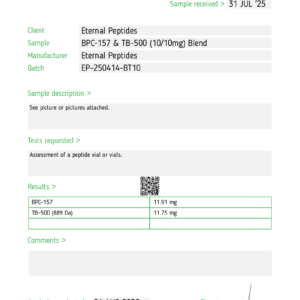
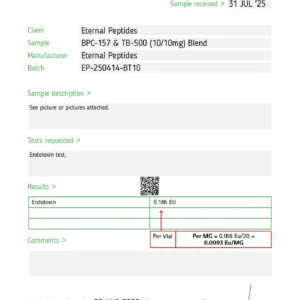
Rigorous Third-Party Testing
Every batch of our research chemicals and peptides undergoes
third-party testing.
*Disclaimer: This product is intended solely for laboratory research purposes. It is not suitable for consumption by humans, nor for medical, veterinary, or household purposes. Kindly review our Terms & Conditions before making a purchase.

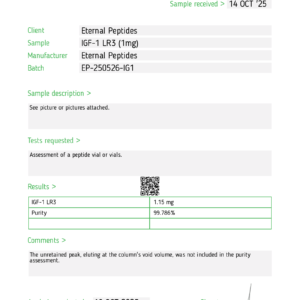
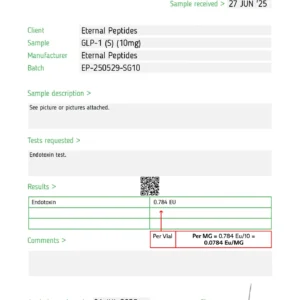
Always quality-tested, verified with third-party COAs
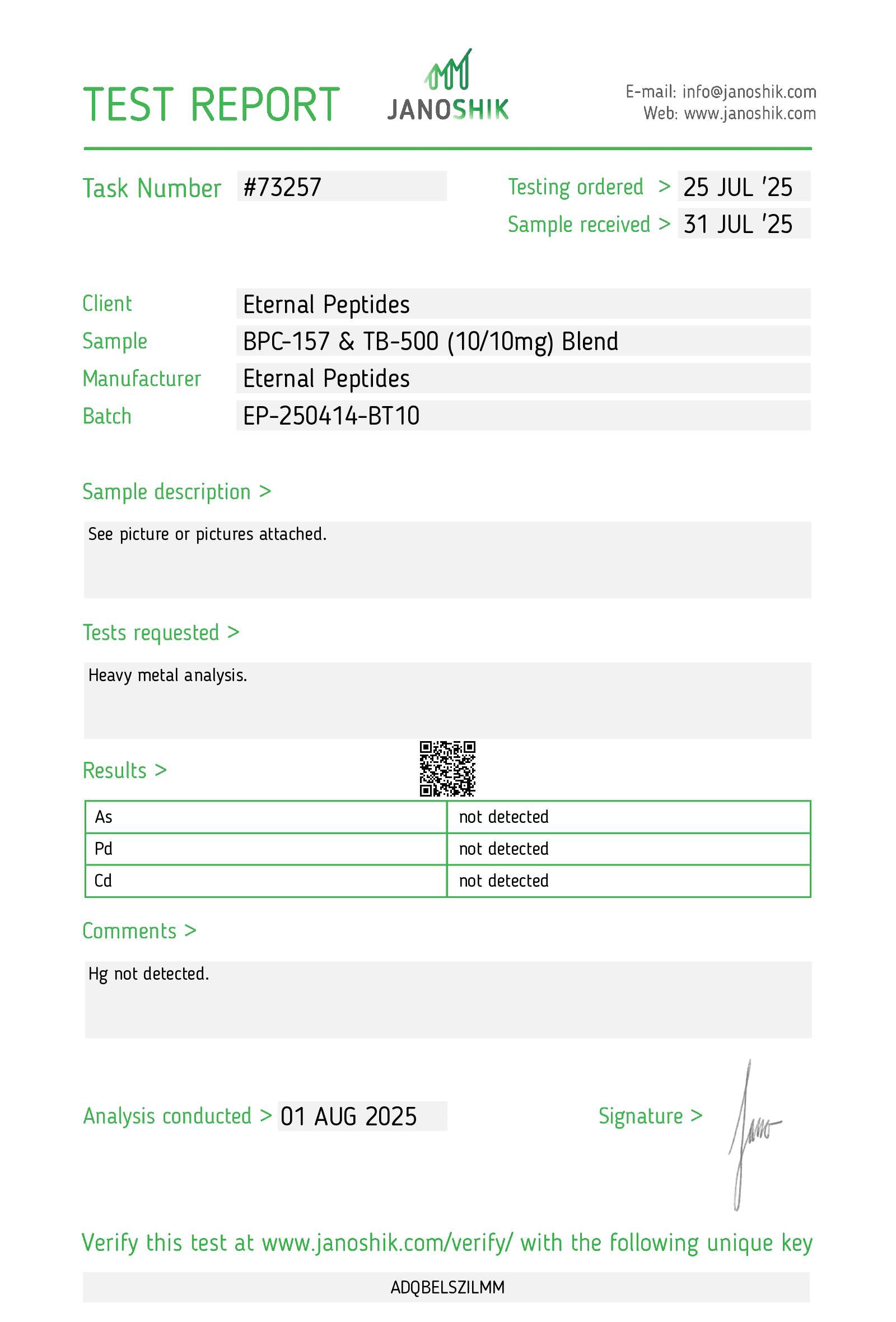
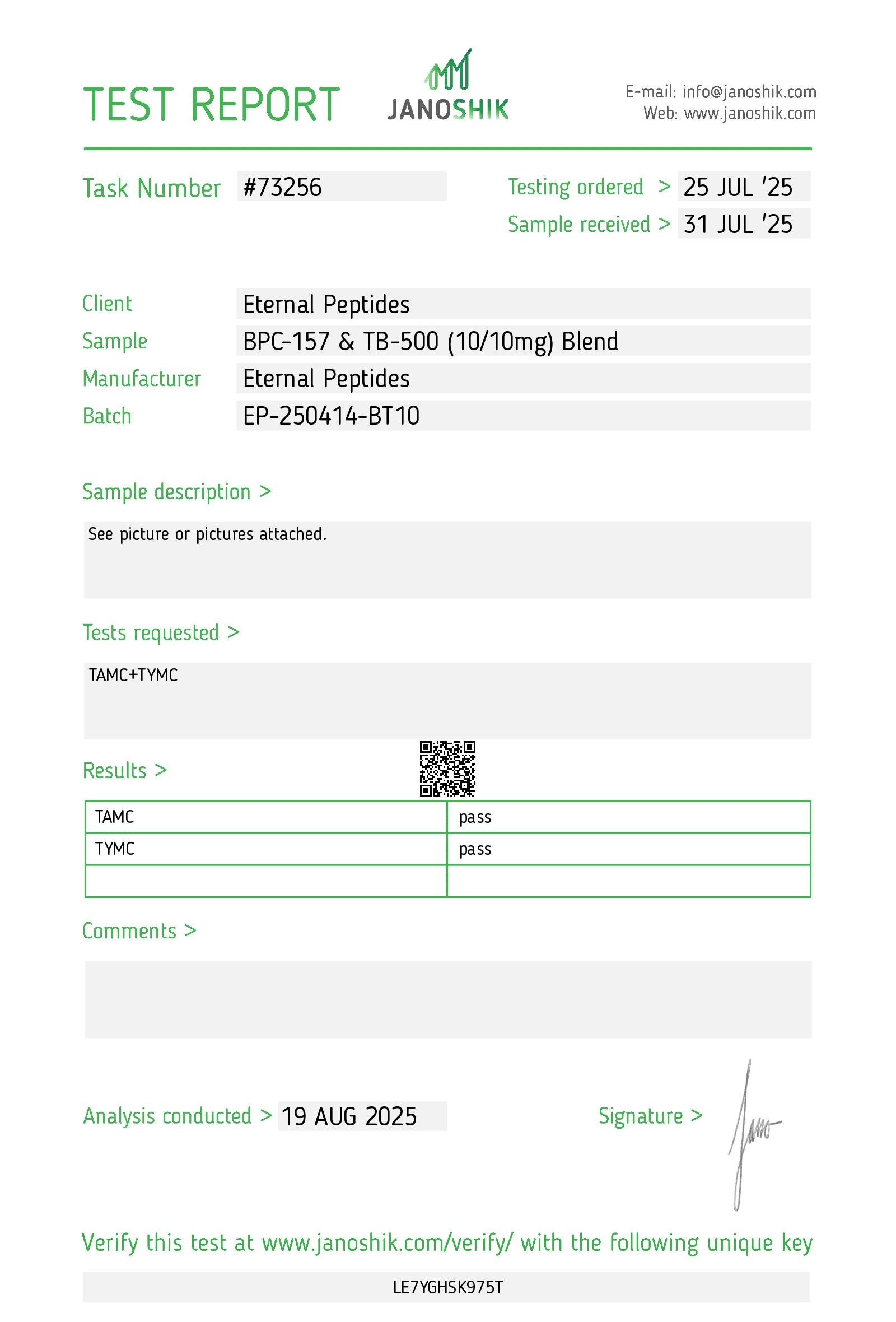
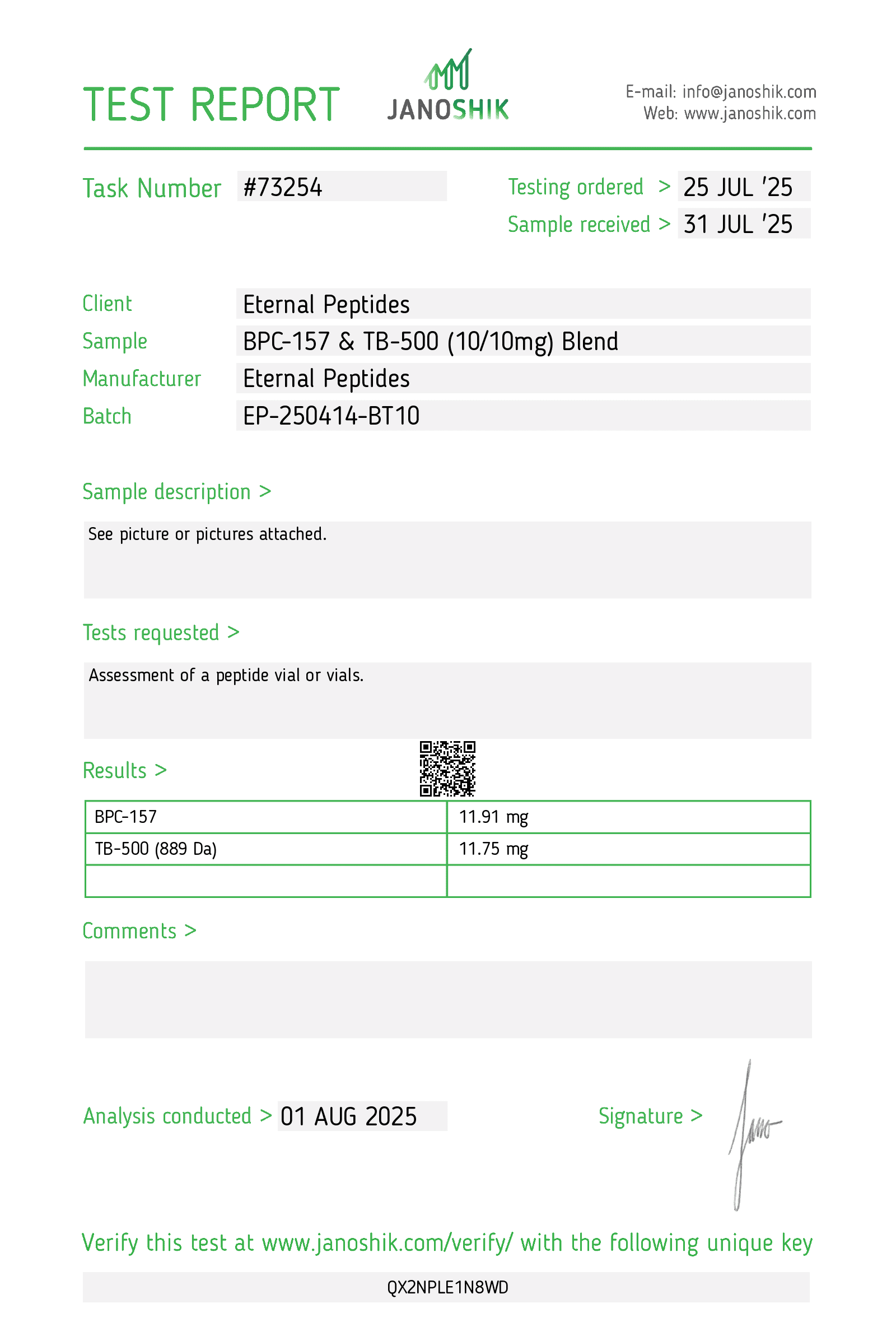
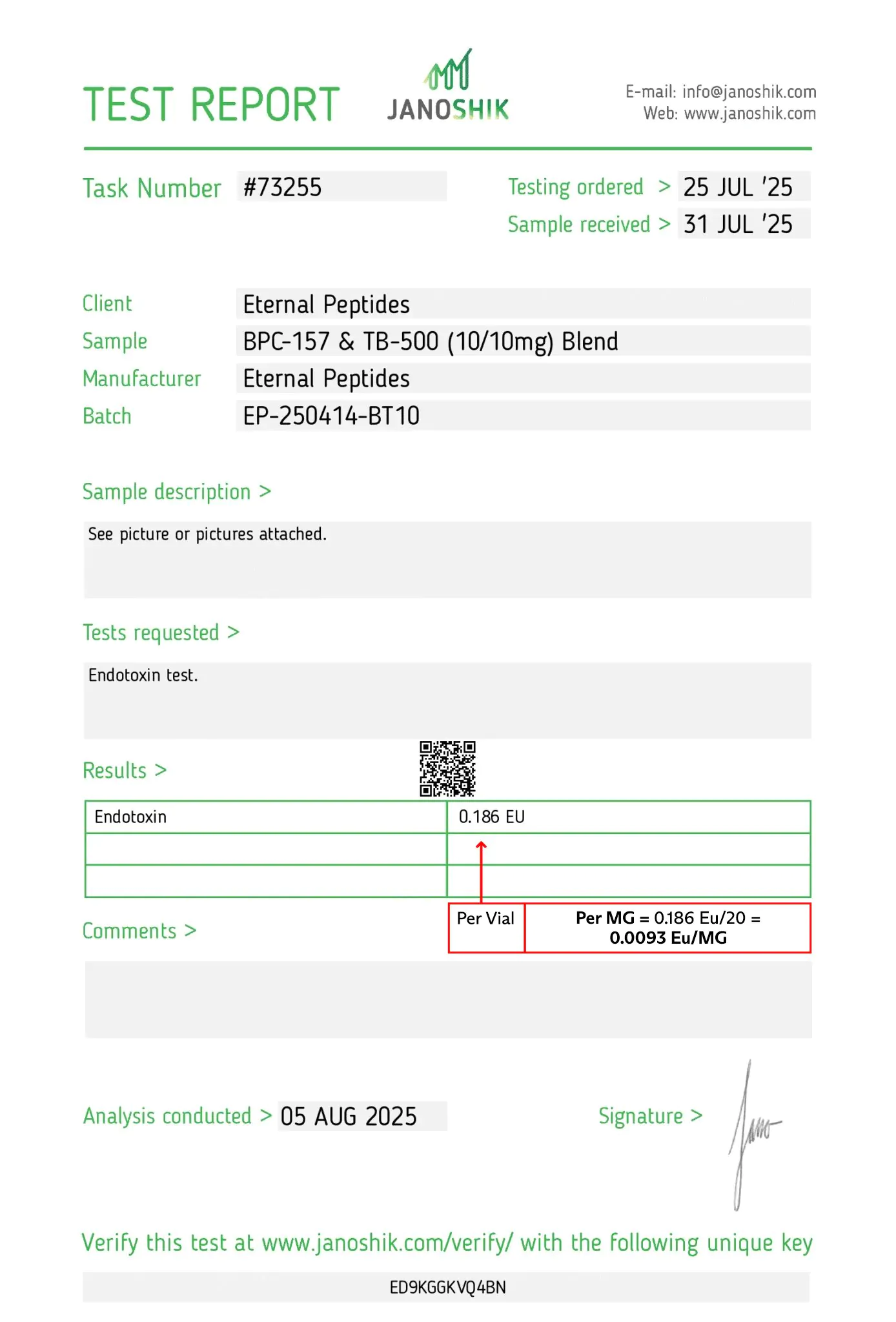
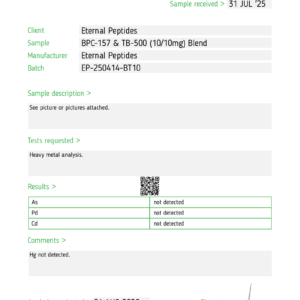
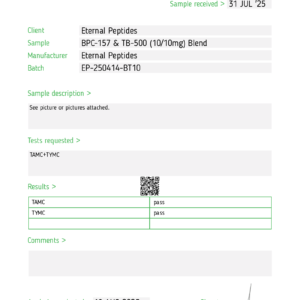
At every step, we prioritize quality by conducting rigorous third-party testing on all our products. These tests focus on five key characteristics- identity, purity, sterility, and endotoxin levels, and heavy metal content-ensuring that each product meets the highest standards of quality with independent third-party Certificates of Analysis (COAS) to verify our commitment to excellence.
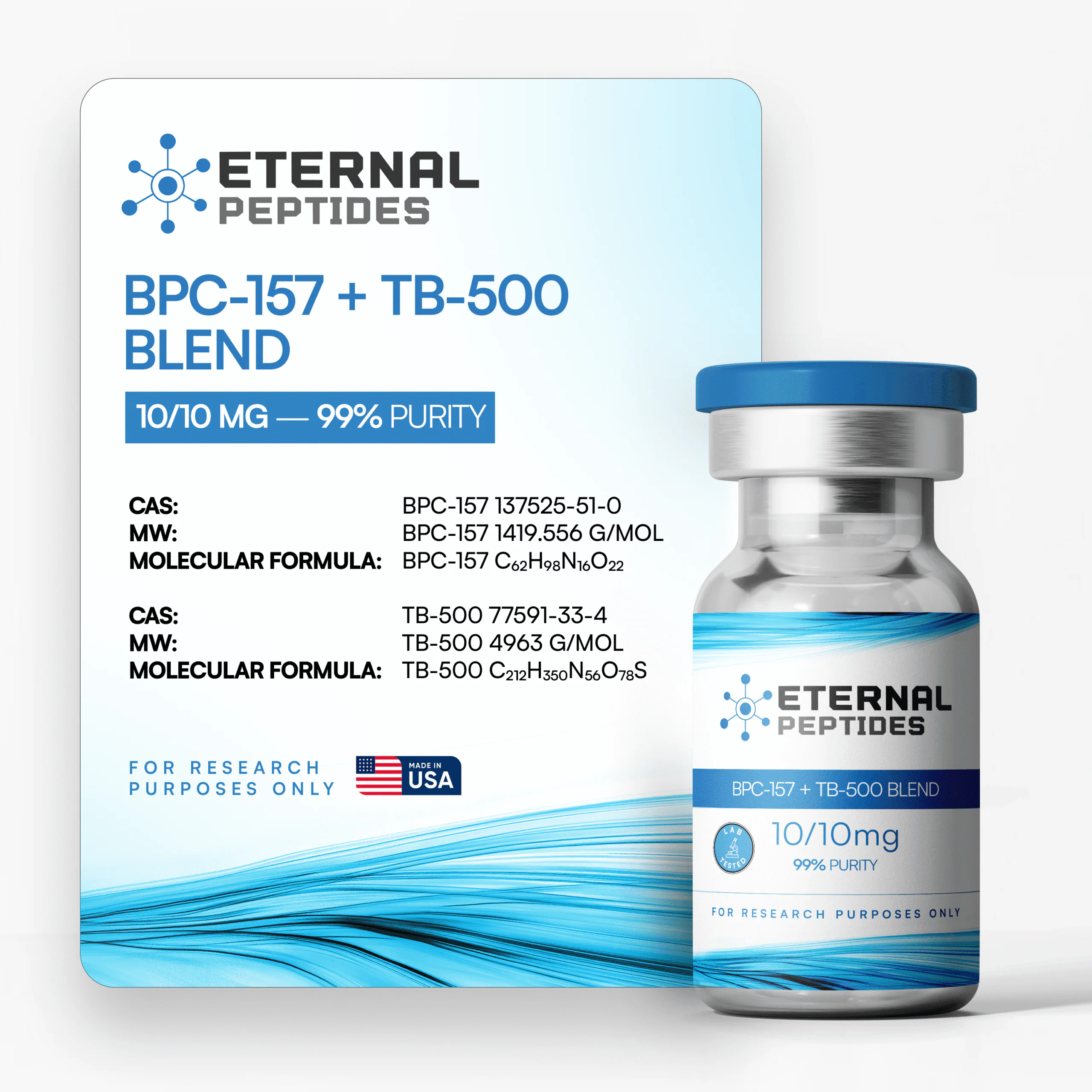
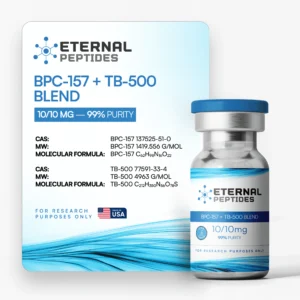
Buy the 10mg/10mg BPC-157 + TB-500 combination from Eternal Peptides, a trusted supplier known for dependable large-scale research products. This 20mg total Wolverine Blend is formulated to deliver reliable consistency for long-term studies, with ≥99% purity confirmed through Janoshik COAs. We serve both institutional labs and independent researchers with complete batch traceability and 24/7 customer support. Order today for fast, discreet U.S. shipping, plus free delivery on purchases above $200.
What Is BPC-157 + TB-500 Blend?
The BPC-157 + TB-500 blend, often referred to as the Wolverine Blend, combines two synthetic research peptides: BPC-157 and TB-500. BPC-157 is a stable pentadecapeptide originally derived from a gastric protein complex, while TB-500 is a synthetic fragment of thymosin beta-4 containing its active actin-binding region.
Both compounds have been widely explored in preclinical research for their possible involvement in cellular repair, angiogenesis, and inflammatory pathway modulation.
Current investigations focus on the blend’s potential synergistic effects in tissue recovery models, including tendon, muscle, and soft-tissue repair, as well as vascular support and cytoprotective activity.
BPC-157 is commonly studied for endothelial signaling and growth-factor modulation, whereas TB-500 is researched for its influence on actin dynamics and cell migration. Together, they are often examined for complementary roles in regenerative research models.
Most available findings come from in vitro and animal studies, with very limited controlled human research. Neither BPC-157 nor TB-500 is approved for human or veterinary therapeutic use.
How BPC-157 + TB-500 Blend Works (Mechanism of Action)
According to current research, the BPC-157 + TB-500 Blend may function through several coordinated biological pathways, reflecting the multi-targeted nature of both peptides. Existing mechanistic insights come mainly from cell-based and animal studies exploring tissue repair, angiogenesis, inflammation control, and cytoprotection. While each peptide acts independently, combined use in research settings is believed to create complementary or additive effects on recovery processes.
Angiogenesis and Endothelial Support
Preclinical studies suggest BPC-157 may affect angiogenic pathways linked to endothelial stability and microvascular repair. These effects are often associated with growth-factor signaling and nitric-oxide synthase modulation. TB-500, through its interaction with actin pathways, has also been studied for its possible role in vascular remodeling and new microvessel formation.
Together, these effects may improve blood flow and nutrient delivery to damaged tissues, both important factors in tissue recovery. Better circulation may also help preserve cell survival, oxygen delivery, and restoration of tissue structure.
Actin Dynamics, Cell Migration, and Tissue Remodeling
TB-500 is derived from thymosin beta-4, a peptide known for regulating actin polymerization and influencing cell movement during repair processes. Studies suggest TB-500 may support cytoskeletal organization, cell migration, and extracellular-matrix remodeling.
BPC-157 has also been investigated for potential effects on adhesion-related proteins such as FAK and paxillin, which contribute to migration and tissue restoration.
Together, these peptides may assist the movement of repair cells to injury sites while supporting structural recovery of tissues, especially in muscle, tendon, and connective-tissue models.
Inflammatory Modulation and Cytoprotection
Preclinical evidence indicates both BPC-157 and TB-500 may help regulate inflammatory pathways. BPC-157 has been associated with balanced nitric-oxide signaling and reduced excessive inflammation, while TB-500 has been studied for its ability to lower pro-inflammatory mediators and support protective cellular environments.
By limiting excessive inflammation, the blend may help reduce secondary tissue damage and create conditions more favorable for healing. This can be especially relevant in preventing prolonged inflammation or fibrosis in research models.
Gastrointestinal and Organ Protection
BPC-157 has been extensively researched for gastrointestinal tissue support, including protection of the mucosal lining, reduced lesion formation, and improved barrier integrity in rodent studies.
TB-500 has also been explored in organ-protection models, particularly regarding cellular survival under stress.
These findings suggest the blend may provide broad cytoprotective potential across multiple tissue types in experimental settings, though these observations remain limited to preclinical studies.
Related Products
Related products
,